While solar panels are pretty resilient pieces of tech, there’s no getting around the fact that they work better when they’re clean. In fact, dirty panels can lose up to 35% of their energy output. But don’t worry, you don’t need specialized tools or to hire a pricey professional to keep them running at their best.
Learning how to clean solar panels is much easier than you’d think, and we’re here to walk you through the entire process. Let’s get your panels shining and maximize their power output. No pressure washer required (seriously, don’t do that).
Here’s the deal: dirt, dust, bird poop (one of the most common offenders, apparently), pollen, leaves, and even water impurities can build up on your panels over time.
It’s safe to assume that none of this is surprising, as we all know how quickly a car gets dirty, even if it’s just sitting in your driveway. However, unlike a dirty car, dirty solar panels don’t just look ugly, they actually suffer when it comes to their power generation performance.
This is because the layer of grime that builds up on the glass surface of the panels can act like a sunscreen you didn’t ask for, reducing the amount of sunlight your panels can absorb.
When the photovoltaic cells inside your panels cannot absorb as much sunlight, it can hugely cut into their efficiency and overall power output. In fact, dirty panels can lose anywhere from 5% to 35% of their energy output, depending on how dirty they are.
If you’re thinking, “that’s not a huge deal,” remember: every kilowatt-hour counts when it comes to saving money and cutting your reliance on the grid. Plus, cleaning your panels regularly could even help them last longer, so consider it a small investment of your time and effort for worthwhile results.
This all makes more sense once you learn how solar panels work, but the main takeaway is the simple fact that clean solar panels usually generate more electricity than dirty panels.
While it’s not critical, timing is important when it comes to cleaning your solar panels. You don’t need to scrub them every week (unless you’ve got a family of particularly messy birds setting up shop in a nearby tree).
In most cases, a good cleaning every six months will do the trick. If you live in an especially dusty area or near a major construction zone, you might want to bump that up to once every few months.
We find that giving them a quick wipe down or even just a quick spray with the hose once per season does the trick, but then again, our backyard setup doesn’t really get overly dirty. Basically, just use your best judgement. If they look visibly dirty, or you run a finger across the face of a panel and it has a film of dust, debris, pollen, or whatever, take the time to clean them.
Pro Tip: Cleaning your panels early in the morning or late in the evening is best. Not only will your efforts interfere less with your solar power production, the water you use won’t evaporate before you’re done.
Trust us, you’re also going to want to avoid cleaning your solar panels midday during the summer, as touching hot solar panels in the middle of a blazing hot day is a rookie mistake you’ll only make once.
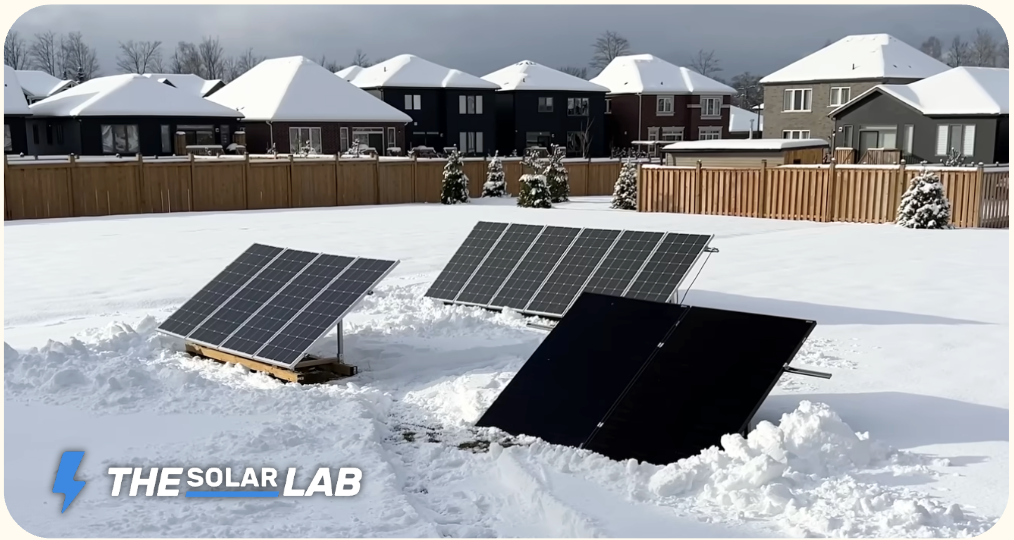
Snow is different from the usual grime that builds on the surface of panels. If your panels are covered in snow, they can’t produce power. In these cases, the best thing you can do is wipe the snow off as soon as possible.
Basically, all you need is something that isn’t going to scratch the surface of the panels, so a soft broom or even a leaf blower will do the trick.
Remember, solar panels do generate power during the winter months. In fact, they can actually work more efficiently in colder temperatures, but only if they are unobstructed by snow.
You don’t need any fancy equipment to get started. No professional tools, no high-pressure hoses, and definitely no squeegees that cost half as much as the panel you’re cleaning. This is all you’ll need:
Plenty of companies also sell solar panel cleaning tools and poles, like this Tucker Bravo Solar Cleaning Kit. If you don’t mind spending the money, they can definitely help, but they’re far from necessary.
Now, the reason you’re here: cleaning your solar panels. Here’s how we clean the panels we have mounted outside of The Solar Lab:
Before you grab your trusty bucket and hose, make sure to disconnect your solar panels. Check the manufacturer’s instructions for the proper procedure, but most panels can be unplugged fairly easily.
If you’re just wiping them down with a dry cloth, this isn’t necessary. However, if you’re whipping out the soap and water, this step is non-negotiable. Even though panels are designed to stay outdoors and get wet, they still produce an electric current, so it’s always better to be safe than sorry.
This is a good opportunity to inspect your solar panels for chips, cracks, or any other type of noticeable damage. The last thing you want is for one of your solar panels to not be producing any sort of charge because that bratty kid next door clocked one with a baseball and didn’t tell you.
Taking the time to inspect your solar array can make all the difference when you’re trying to maximize solar energy production. After you finish cleaning, you can also make sure that all of your solar panels are wired properly.
Once you have checked to make sure that none of your solar panels are damaged, take a quick look to see what you’re dealing with as far as the dirt and grime goes. Are we talking about a light layer of dust, or did your neighborhood pigeons declare war on your panels?
Use your garden hose to give the panels a good rinse. This will loosen up any loose dirt and debris. Think of it as a pre-wash cycle for your solar panel setup.
Dip your soft brush or microfiber cloth into the soapy water and start scrubbing. Be gentle here, as high-quality solar panels are tough, but their glass surface can still scratch if you get too aggressive. Just like when you clean your car, make sure no stones or other objects find their way into your scrub brush or soap bucket.
Once you’ve scrubbed away all the dirt and grime, give the panels another rinse with the hose to wash off any remaining soap. Make sure there’s no residue left behind. As soap spots and residue can actually block sunlight, defeating the purpose of your hard work.
Finally, let the panels air-dry. If the air is humid and you don’t think they’ll dry for a while, you can use a squeegee to speed things up, but honestly, the sun does a pretty good job of this on its own.
Dirty solar panels are always going to outperform broken or damaged panels, so don’t shoot yourself in the foot by doing something stupid. Here are a few things to avoid when cleaning your solar panels:
Ah, the age-old question: can you just let Mother Nature do the work? While rain does help wash away some dirt and dust, it’s not a perfect solution. Think of it like rinsing your car with a garden hose instead of hand-washing it or taking it to the car wash. It’s better than nothing, but it won’t get the job done completely.
Plus, rain often leaves behind spots and doesn’t tackle stubborn grime, bird droppings, and other stuck-on materials. So, while you can thank the weather for the occasional rinse, don’t rely on it for long-term maintenance.
Remember, you don’t need to clean solar panels that often. You should brush away snow and anything that physically blocks the sun, but actually cleaning the surface of the panels only needs to be done a couple of times a year.
Keeping your solar panels clean is one of the easiest ways to ensure they’re running at maximum efficiency. Plus, it gives you a good opportunity to perform a routine damage inspection.
A little elbow grease every few months can go a long way towards boosting your energy output and extending the life of your system. And, let’s be honest—clean solar panels just look better.
Signature Solar: https://signaturesolar.com/solar-panels
Use Code: SOLARLABGET50 for $50 Off Your Order
Shop Solar: https://shopsolarkits.com/collections...
Use Code: THELAB for 4% Off Your Order
Explore more practical tips, guides, and insights to help you get the most out of solar
More Resources >