When EcoFlow released their brand-new DELTA Pro Ultra X, they weren’t just introducing a slightly upgraded version of their flagship system, they completely changed the game. With nearly double the inverter output and solar input of the already-impressive original EcoFlow DELTA Pro Ultra, the new X version is a huge step forward for all portable power stations.
With that said, once we started actually comparing the DELTA Pro Ultra X directly to the original EcoFlow DELTA Pro Ultra, things were more complicated than we had expected.
While it’s true that the new model adds power and performance in a few key areas, it also removes a few features, introduces a proprietary charging cable, and costs about $2,000 more for a comparable setup.
In this guide, we’ll help you decide if you should buy the DELTA Pro Ultra or DELTA Pro Ultra X. We’re going to compare these highly scalable EcoFlow power stations by assessing their performance capabilities, features, and price points. If you’re unsure which model you should spend your hard-earned money on, you’ve come to the right place.
Before we dive into our own experiences with these two power stations, here's a quick comparison of how they stack up against each other:
On paper, the DELTA Pro Ultra X clearly wins on raw performance, but when you start diving into the actual value and real-world usability, you get a more nuanced story.
If you want to learn more about either unit, we have full reviews where you can read up on each EcoFlow power station separately:
For the purposes of this comparison guide, we’re going to focus on how the two stack up against each other in each major category. Let’s start off by taking a look at the biggest upgrade you get with the DELTA Pro Ultra X:
The most obvious upgrade you get with the EcoFlow DELTA Pro Ultra X is its massively increased inverter output. The new system delivers 12,000 watts (12kW) of AC output, which is absolutely ridiculous for a portable unit.
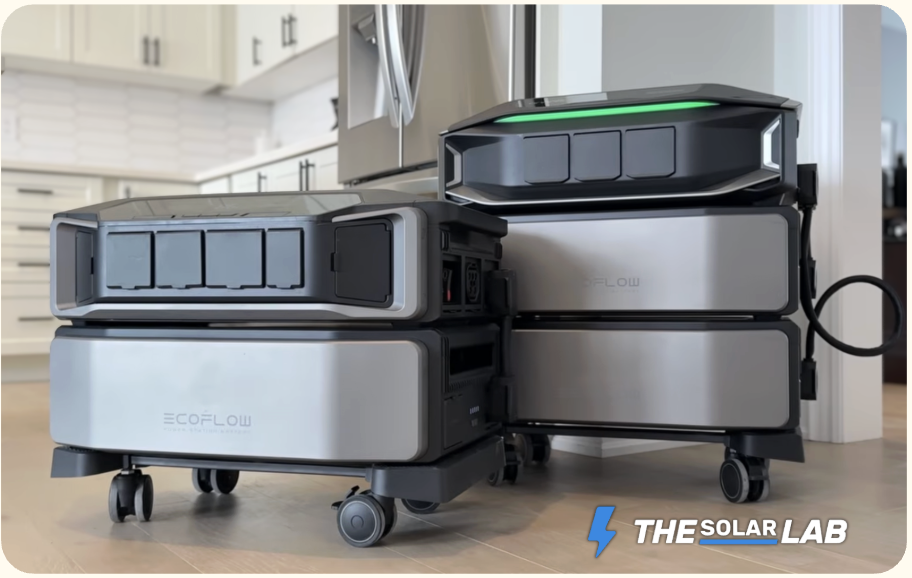
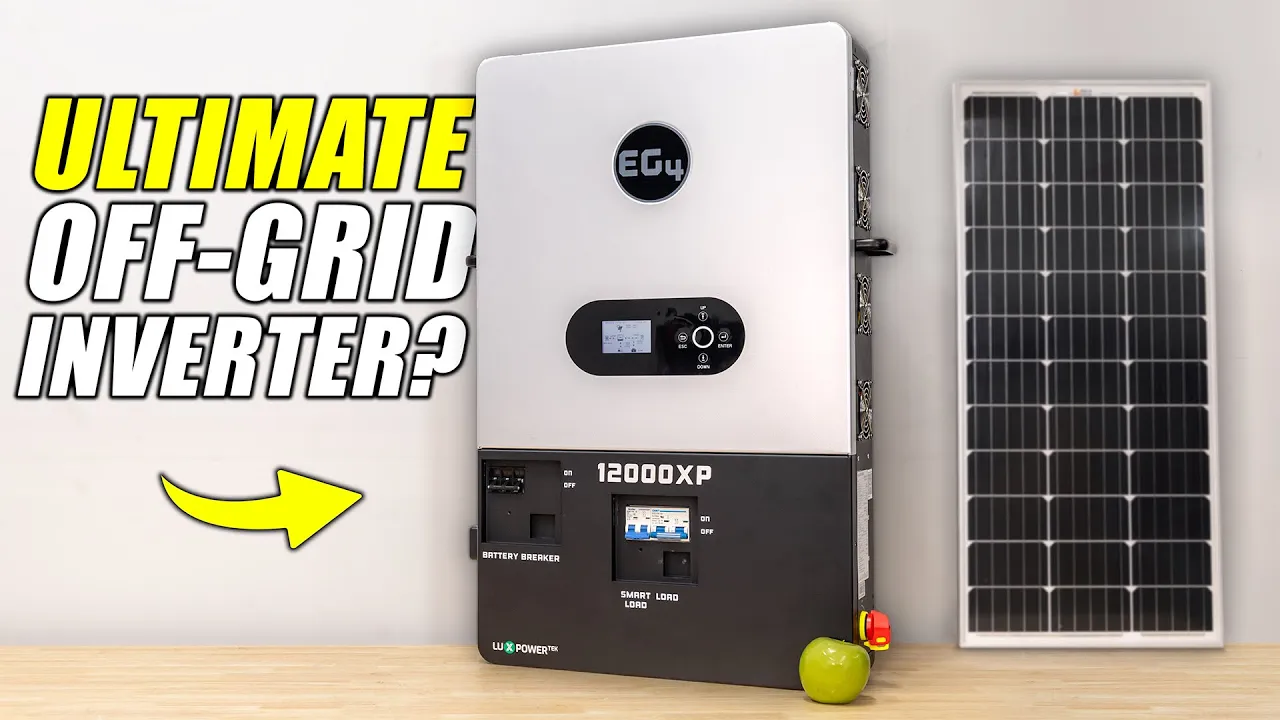
With a maximum continuous output of 7,200W, the original DELTA Pro Ultra was no slouch in this department, but 12kW is almost double the output! It also allows the DELTA Pro Ultra X to compete with traditional standalone inverters, like the EG4 12000XP Off-Grid Inverter.
Given that EcoFlow markets their DELTA Pro Ultra X as a whole-home backup power system, it makes a lot of sense that they would equip it with such a powerful inverter, but 12kW is still insane for a single unit. Typically, even the most powerful portable units still need to be paired with a second unit to hit anywhere close to that output.
The solar input also received a huge boost with the new DELTA Pro Ultra X. Here’s how they compare:
For users planning to run large solar arrays or rapidly charge their batteries with off-grid power, the Ultra X model clearly has the advantage. Again, the original DELTA Pro Ultra’s 5,600W solar input was nothing to sneeze at, and it was actually the highest we had ever seen when it first launched at the beginning of 2024.
At this point, it’s worth noting that both systems still use the same battery modules, with each EcoFlow DELTA Pro Ultra Smart Extra Battery adding 6,144Wh of storage capacity.
In other words, the batteries charge at different rates and the units have different power outputs, but the power storage and battery stacking work pretty much the same way.
Just like the original, the DELTA Ultra X uses a modular design that allows you to expand the storage as needed with extra batteries.
Each battery adds 6kWh of capacity, and both systems can scale into extremely large energy storage setups. However, because the DELTA Pro Ultra X has a larger inverter, the maximum system size increases dramatically.
The battery expansion limits for each power station breaks down like this:
While they’re both very scalable, the Ultra X has a much higher maximum battery capacity. EcoFlow clearly designed the X version for larger whole-home battery installs or serious off-grid systems.
One of the lesser-known improvements EcoFlow made with the DELTA Pro X is the inclusion of longer battery cables and multiple expansion battery ports. This allows users to create multiple stacks of batteries, instead of forcing them to create a single column. You still get the short connector cables if you want to keep things tidy, but if you’re hoping to spread your batteries out, the longer cable allows you to have several stacks running from the same inverter module.
It’s also worth noting that for the majority of homeowners just looking for backup power during power outages, both of these systems offer more storage scalability than they’ll likely ever need. Both versions of the DELTA Pro Ultra are hugely scalable units that blur the line between a portable power station and a permanent solar power system.
One of the strangest changes on the DELTA Pro Ultra X is that it actually loses some features compared to the original model.

The original DELTA Pro Ultra includes four 120V AC outlets, as well as multiple USB ports for charging phones and laptops. Meanwhile, the new DELTA Pro Ultra X only has two 120V AC outlets, and all of the USB-A and USB-C ports have been removed.
For a large home battery system that was meant to work with the Smart Home Panel 3, having fewer built-in ports may not seem like a big deal. But in practice, a lot of people still use these ports for fast-charging phones, laptops, camera batteries, and other small electronics.
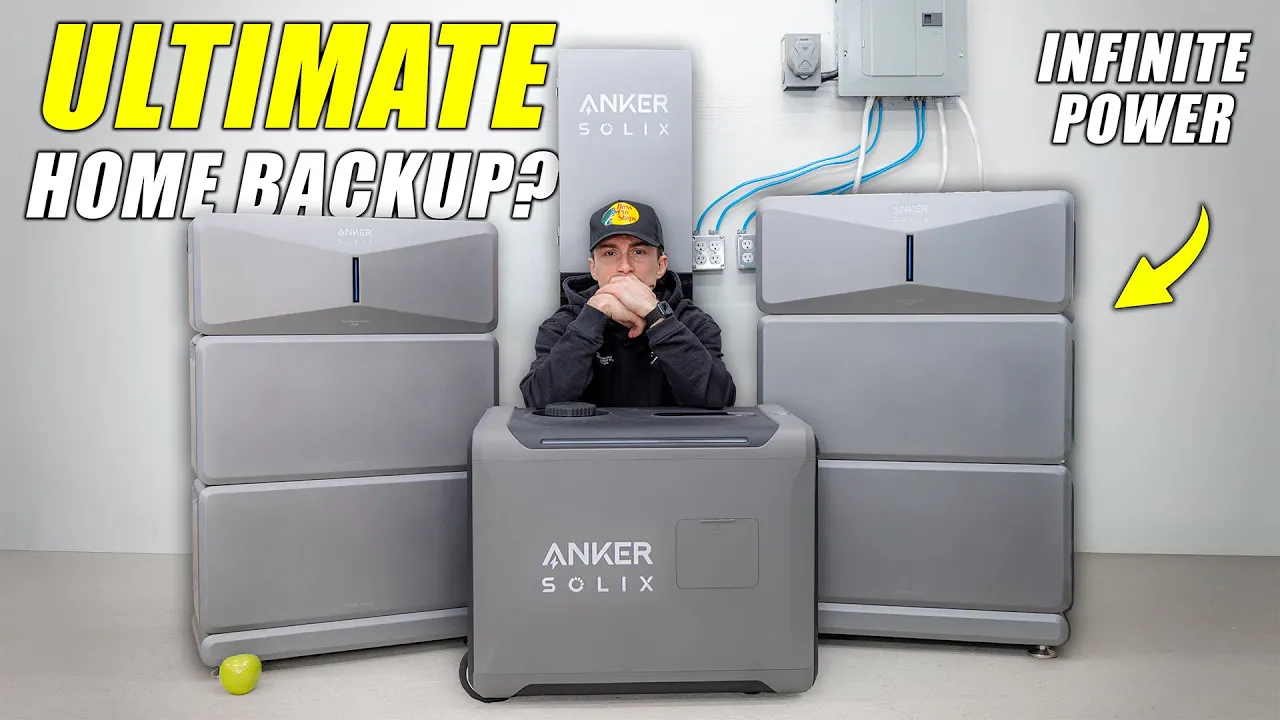
We use an Anker SOLIX F3800 Plus in our office, both for backup power and for situations where there is a shortage of outlet space. Even though it’s a bigger power station that was designed for running more demanding appliances, having that flexibility is nice. Again, EcoFlow’s decision to remove them from the DELTA Ultra X is a bit surprising.
One addition that we really like on the EcoFlow Ultra X is the inclusion of an LED light bar that cleanly displays your remaining battery life. Not only does it look pretty cool, it also gives you the ability to quickly monitor your system from afar, without needing to open the app or use the display.
Another controversial change on the DELTA Pro Ultra X is the new proprietary charging cable The original DELTA Pro Ultra used more standard connections, meaning if you lost or damaged the cable, you could easily and cheaply replace it.
With the new X model, the AC charging cable is unique to EcoFlow. If it breaks or gets misplaced, you’ll likely need to purchase a replacement directly from EcoFlow, which will almost certainly cost more than a generic cable. Probably about 90% of the power stations we have tested use the same charging cable, which can be ordered from Amazon for about $25. This new EcoFlow-specific charging cable is priced at over $100.
The X version also requires a solar isolator switch for solar connections. The original DELTA Pro Ultra had this built into the system, making solar installation more plug-and-play. The new setup requires additional wiring and installation.
For people installing large solar panel arrays, especially something approaching 10kW of solar output to match the DELTA Pro Ultra X’s 10kW solar input, this change makes sense from a safety standpoint. But it does make the system slightly less beginner-friendly for those looking to occasionally solar charge their unit with a few basic panels.
One area where the DELTA Pro Ultra X clearly improves on the original DELTA Pro Ultra is idle power consumption.

The Ultra X’s new inverter consumes roughly 36W while idle, which is impressively low considering the size of the system and the massive 12kW output rating. With just two batteries connected, the system can sit powered on for nearly two weeks without external charging!
For a power station with a 12kW inverter, that level of efficiency is extremely impressive and actually better than some of the smaller portable power stations we’ve tested. For perspective, the original DELTA Pro Ultra has nearly double the idle rate (roughly 60W).
The DELTA Pro Ultra X is also incredibly efficient. What that means is more of the power you store in its high-capacity batteries is actually used to power your loads. It may not seem like a big deal when you’re just running a few basics, but it can make a meaningful difference if you’re planning to use this system for whole-home backup power.
Despite the increased power, the DELTA Pro Ultra X has some quirks when it comes to load balancing. The system delivers its 12,000 watts of output through two 6,000W legs.
In testing, loads that pushed one leg significantly above the other, like 6,500 watts on a single leg, could cause the system to shut down quickly.
Traditional solar inverters and home battery systems often tolerate small imbalances more gracefully, so this is something EcoFlow may need to improve with firmware updates. Keep in mind that the DELTA Pro Ultra X is really new, so it was bound to have a few small software issues.
Another issue we discovered during testing of the DELTA Pro Ultra X occurred when we were charging it with a gas generator. Basically, if you’re using a gas generator to charge the unit, the unit currently adds your load on top of the charging input.
For example, let’s say your gas generator outputs 4,000W, and you’ve set the unit’s charge limit at 4,000W to match it. Now you also want to run a 1,000W load from the DELTA Pro Ultra X at the same time it charges.
Instead of staying within the limit, the system will attempt to pull 5,000W from the gas generator, potentially tripping the unit’s breaker. In UPS situations where you’re not there to correct the problem yourself, this would be a major issue.
Again, this is something EcoFlow could likely fix with a software update, but right now it means users need to manually adjust charging speeds based on their load. For a whole-home unit that should be able to run on its own, it’s a bit disappointing that you’d have to take such a hands-on approach to generator charging.
Another unusual design decision is that the DELTA Pro Ultra X requires two batteries to reach full inverter output of 12,000W.
You cannot run the inverter at maximum capacity with just a single battery connected, which is something that you could do with the original DELTA Pro Ultra. In fact, this is the first power station we’ve seen with this type of expansion battery limitation, and it effectively raises the minimum cost of entry for the system.
At the time of our testing, the pricing looked like this:
Since the batteries are identical and cost about $2,000 each, the real difference comes down to the inverter. The original inverter unit is about $2,000, while the Ultra X inverter unit will set you back around $4,000.
That means the new system essentially doubles the inverter price in exchange for the increased power output.
Here’s where the math gets interesting. For roughly the same price as one DELTA Pro Ultra X and the two batteries you’d need to run it, you could buy two original DELTA Pro Ultra’s and a pair of batteries.
When connected together through a combiner or the EcoFlow Smart Home Panel, this setup would provide 14.4kW of output power and have a 11.2kW solar input.
That’s actually more output and solar capacity than the Ultra X when paired with two batteries, even though it would have the same storage capacity. Plus, going with two of the older Ultra inverters over a single Ultra X unit would give you a lot more flexibility.
You could leave one unit connected to your home and take the other to an RV, cabin, trailer, tiny home, or just split them up to use in different parts of the house. For example, let’s say you kept one unit with a single battery in your kitchen to power your appliances, and the second out in the garage to power tools and an HVAC system.
This modular approach is something we often recommend with setups like the 2 × Pecron E3600LFP Bundle, where you get two portable units that can be combined for 240V power, but still split apart for portable use.
Choosing between the EcoFlow DELTA Pro Ultra and DELTA Pro Ultra X ultimately depends on your priorities, as well as your budget.
Choose the DELTA Pro Ultra X if you want:
Choose the original DELTA Pro Ultra if you want:
The EcoFlow DELTA Pro Ultra X is undeniably the more powerful system. With 12kW of inverter output and 10kW of solar input, it’s one of the most capable portable battery systems ever made. But bigger doesn’t always mean better.
When you factor in price and classic power station features, like built-in DC ports, the original EcoFlow DELTA Pro Ultra still offers incredible value and flexibility, especially if you consider running multiple units together.
Still, if you want the cleanest, simplest large battery system, the Ultra X is a fantastic choice. But if you’re shopping strictly for the best performance per dollar, the original DELTA Pro Ultra still has a lot of life left in it.
Plus, the price for the original unit will probably come down with time. We regularly recommend the original EcoFlow DELTA Pro and the EcoFlow DELTA 2 Max, and both of those units have been out for nearly five years, so new doesn’t always mean better, and old doesn’t always mean outdated.

We test solar products so you don’t have to. Check out our opinions and which units we think are worth your money and which ones aren't.
More Reviews >