We all know that electricity powers the things inside our homes. It keeps fridges running, lights on, and flows from solar panels to charge your battery bank, but there’s one small component that is often overlooked: the circuit breaker. This small device works quietly in the background to prevent your electrical system from turning into a fire hazard.
Even having a basic understanding of how breakers work is one of the most useful things you can learn about electricity. This is particularly true if you’re installing solar panels, upgrading an existing off-grid system, or really have any interest in DIY solar.
In this guide, we’ll break down the basics of what breakers do and how they work internally, provide a quick overview of where they came from, and explain the critical role they play in all modern electrical systems.
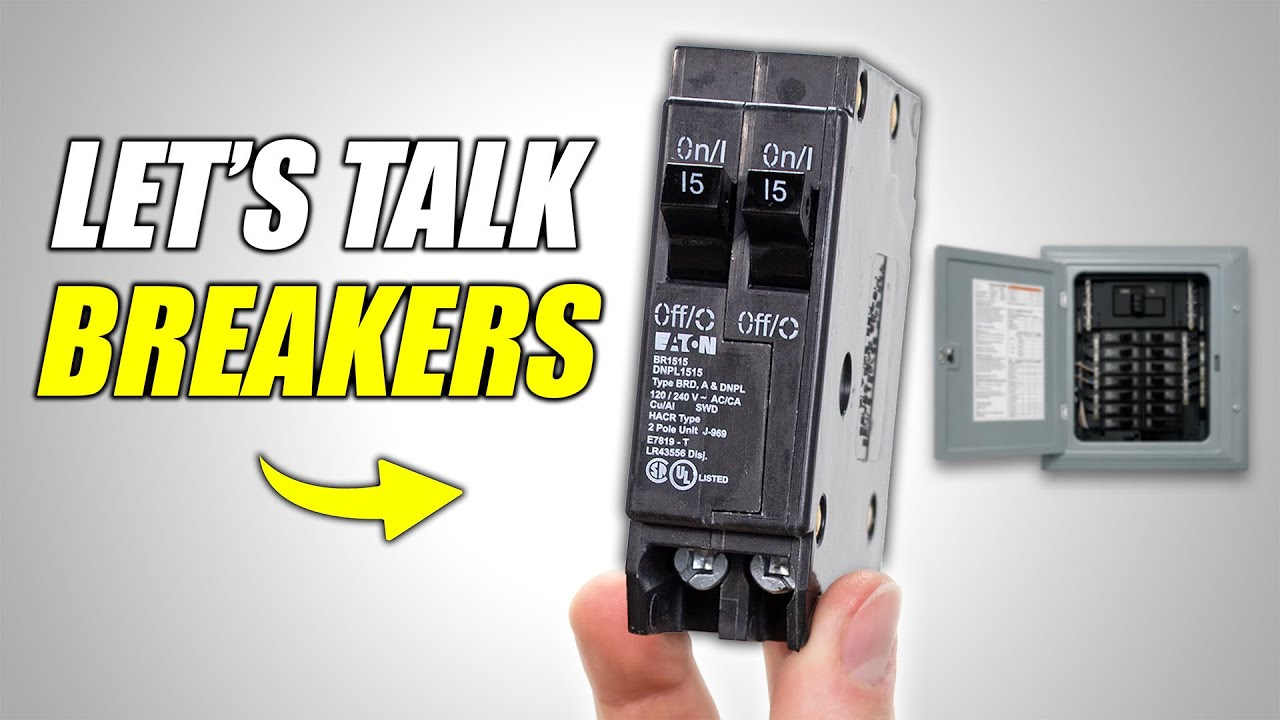
In the simplest terms, a circuit breaker is a protective device that automatically stops electricity when too much current flows through a circuit. They pretty much act as a safety switch for any electrical system.
When it comes to breakers, one of the most common misconceptions is what their main role even is. A lot of people think they’re there to protect the appliances and devices that are plugged into the system, or even the people plugging those electrical loads in, but their actual job is to protect your wiring.
Electrical wires are designed to safely carry a certain amount of current. When that limit is exceeded, the electricity flowing through them generates heat. If the current continues flowing unchecked, the wires can become so hot that they will melt insulation, damage walls and equipment, and even start an electrical fire.
This is where a circuit breaker comes in. When a breaker detects unsafe conditions, it will “trip”, meaning it instantly opens the circuit and stops electricity from flowing through the wires.
When electricity first entered homes in the late 1800s, electrical safety was pretty much non-existent. Households were being wired up with little-to-no oversite, it was like the Wild West for electricity.
Early wiring systems often had cloth insulation, absolutely zero grounding, and the wires being used were too small for the electrical loads that were being put through them. When too much current flowed, nothing stopped it. The wires simply overheated, which often caused fires inside walls.
These unregulated electrical systems were incredibly dangerous, causing countless burns and house fires. The first real solution was the electrical fuse.
A fuse is essentially a deliberate weak point in a circuit. Inside the fuse is a small metal filament designed to melt if too much current flows through it. When the filament melts, the circuit breaks and power stops.
Fuses worked well, and they continue to be used in some older buildings today, but they have one big drawback: they can only be used once. After a fuse blows, it has to be replaced.
In the not so distant past, this led a lot of people to bypass safety entirely by choosing to install oversized fuses or even replacing them with coins or pieces of wire. The short-term thinking here is saving money by not having to replace burnt fuses, but it completely defeats the whole purpose of using a fuse as a safety device.
The disposable nature of fuses is actually what led to the invention of the reusable circuit breaker.
Most residential breakers today are called thermal-magnetic breakers, and they contain two protection systems that work together. These mechanisms detect different electrical problems in two different ways:
Thermal protection handles long-term overloads. Imagine plugging a 15-amp space heater into a 15-amp circuit. Now add a TV and a phone charger on the same circuit. The current might slowly climb above the safe level.
Instead of tripping instantly, the breaker uses a bimetal strip that heats up as current flows. If the overload continues long enough, the heat causes that strip to bend, which trips the breaker.
This prevents wires from overheating to unsafe levels over time.
Magnetic protection handles sudden spikes in current, such as a short circuit. A short circuit happens when electricity finds an easier path, like when a hot wire touches a neutral wire or ground. This causes a massive surge of current that happens almost instantly.
Inside the breaker is a small electromagnet, and when the current spikes, the magnetic field becomes strong enough to instantly trigger the breaker mechanism. When this occurs, the contacts snap open and the flow of electricity is instantly stopped.
This fast reaction is intended to prevent catastrophic damage to the wiring and any equipment that is connected to it.
A standard breaker protects wires from overloads and short circuits, but it doesn’t detect every dangerous condition. One of the most dangerous electrical issues is arcing.
A breaker arc fault occurs when electricity jumps across a small gap between wires or connections. This visible arc of electricity can reach extremely high temperatures and easily ignite nearby materials like wood, insulation, or drywall.
You can think of it like a miniature lightning bolt happening between your wires. Just think how dangerous that would be inside your walls, or near any type of flammable materials.
To detect this, modern homes often use AFCI breakers (Arc Fault Circuit Interrupters). These breakers monitor the electrical waveform and look for patterns that indicate dangerous arcing. If this is detected, the breaker shuts the circuit off immediately.
Today, a lot of modern building codes require arc fault breakers, especially for residential circuits. Not only does this help prevent electrical burns, it greatly reduces the risk of electrical fires.
Another specialized breaker you might encounter is a GFCI breaker (Ground Fault Circuit Interrupter). Unlike standard breakers, GFCIs are specifically designed to protect people from electric shock.
They work by constantly measuring the current flowing out of a circuit, then compare it to the current returning in real time. If even a tiny imbalance is detected, the breaker is instantly tripped.
Why does that matter? Because if electricity is flowing through a person instead of returning through the circuit, the GFCI breaker can detect it.
Given that just 0.1 amps of current flowing through a human heart can be fatal, it’s no surprise that a lot of building codes require GFCI breakers in bathrooms, kitchens, laundry rooms, and for outdoor outlets. Basically, any location where people are likely to touch an outlet with wet hands should have a GFCI breaker.
If you’re installing solar panels or building an off-grid system, circuit breakers become even more important. This is because solar power systems introduce multiple sources and forms of electricity.
The solar panels in your system generate DC power, which then flows from the panels to your battery bank. When you need that solar electricity, it then flows from your battery storage system to your inverter. From there, you pull either AC or DC power, depending on your needs.
You also have grid-tied solar power systems, which store both solar and grid power. Each part of the system must be protected from overloads and short circuits.
Most modern solar systems include breakers in several places:
Even if you’re just running a portable power station that charges via solar and AC power, you’re still dealing with current that would be dangerous if the unit did not have built-in breakers.
However, manufacturers often recommend installing external breakers or disconnect switches when integrating a power station into your wider home system.
Let’s say you were going to use a high-capacity power station, like an EcoFlow DELTA Pro Ultra X, to power your home’s main electrical circuits, you’d want to make sure that you had the correct breakers in place to make sure everything was safe.
These added safety layers protect both your equipment and your home.
To determine the correct breaker or fuse size, you first need to calculate how much current a device can draw at its rated power. The easiest way to do that is by dividing the device’s wattage by the voltage it runs on.
Wattage (W) ÷ Voltage (V) = Amperage (A)
For example, imagine you are installing a 1200W inverter on a 12V system. To find the maximum current draw, divide the wattage by the voltage: 1,200W ÷ 12V = 100A
This means the inverter could potentially draw up to 100 amps under a full load. Electrical systems should include a safety margin for continuous loads, so the next step is to multiply that current by 125% (1.25):
100A × 1.25 = 125A
In this example, the breaker or fuse should be rated for about 125A. Since breakers and fuses are typically sold in standard sizes, you would choose the next available size above that rating, such as a 125A or 150A breaker/fuse, depending on what’s available.
Just as important as the breaker itself is the wiring. The cable must be rated to safely carry the breaker’s maximum current.
For example, if you install a 150A breaker, the wire must also be capable of handling at least 150 amps. That way, if an overload or fault occurs, the breaker will trip before the wiring overheats.
If you're finding all of this terminology confusing, we have whole playlist of videos guides that break down the basics of solar and electricity: LEARN Series – Beginner-Friendly Solar Guides
A lot of people misunderstand what breakers are actually designed to do. They’re not primarily there to protect appliances, and most standard breakers won’t trip fast enough to save someone from electric shock.
Instead, the core purpose is just to protect electrical wiring from overheating to dangerous temperatures by shutting off power when unsafe current flows.
By preventing wiring from carrying more current than it was designed for, breakers dramatically reduce the risk of electrical fires.
Circuit breakers might seem like simple and boring devices when you compare them to your batteries, panels, and inverter, but they’re one of the most important safety devices in any electrical or solar power system.
They evolved from simple fuses into sophisticated protection systems capable of detecting overloads, short circuits, and even dangerous electrical arcs.
If you’re getting into solar power, off-grid energy, or any type of backup system, understanding how breakers work will help you build a system that’s not just powerful, but safe. When something goes wrong with electricity, the ability to instantly stop the flow of power can be the difference between a minor inconvenience and disaster.
Signature Solar: https://signaturesolar.com/breakers-switches
Use Code: SOLARLABGET50 for $50 Off
Shop Solar: https://shopsolarkits.com//accessories
Explore more practical tips, guides, and insights to help you get the most out of solar
More Resources >