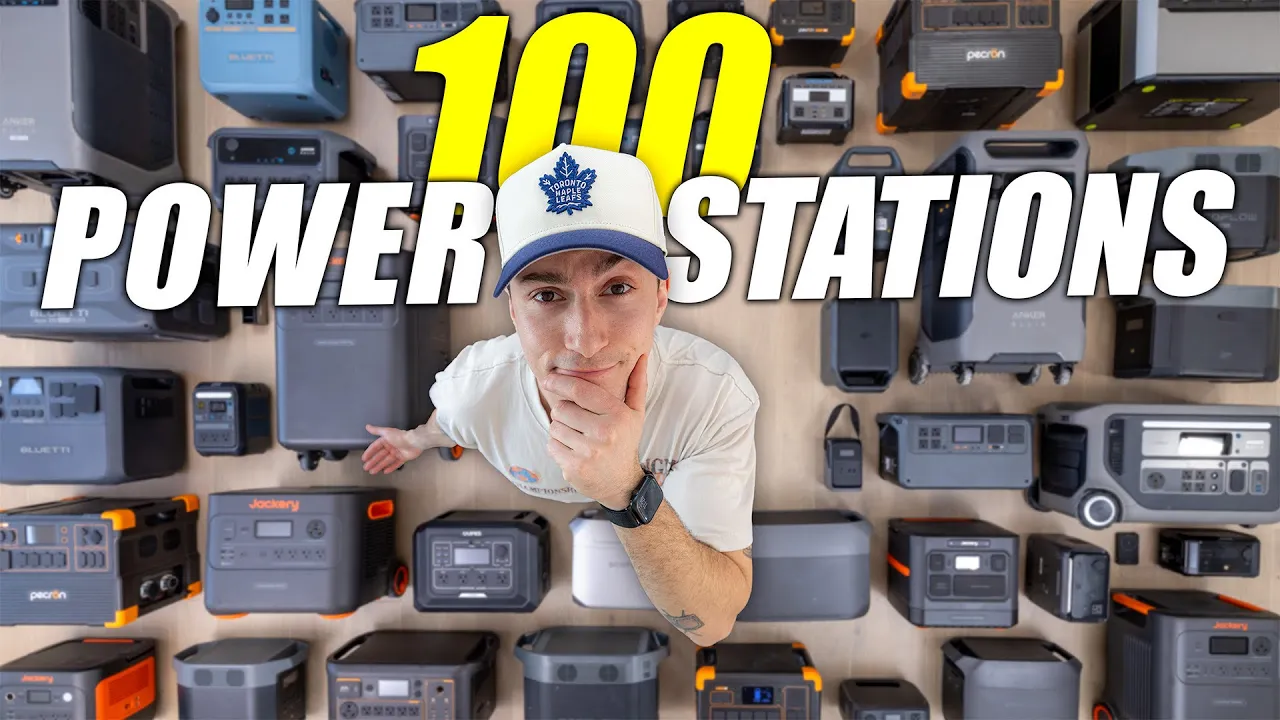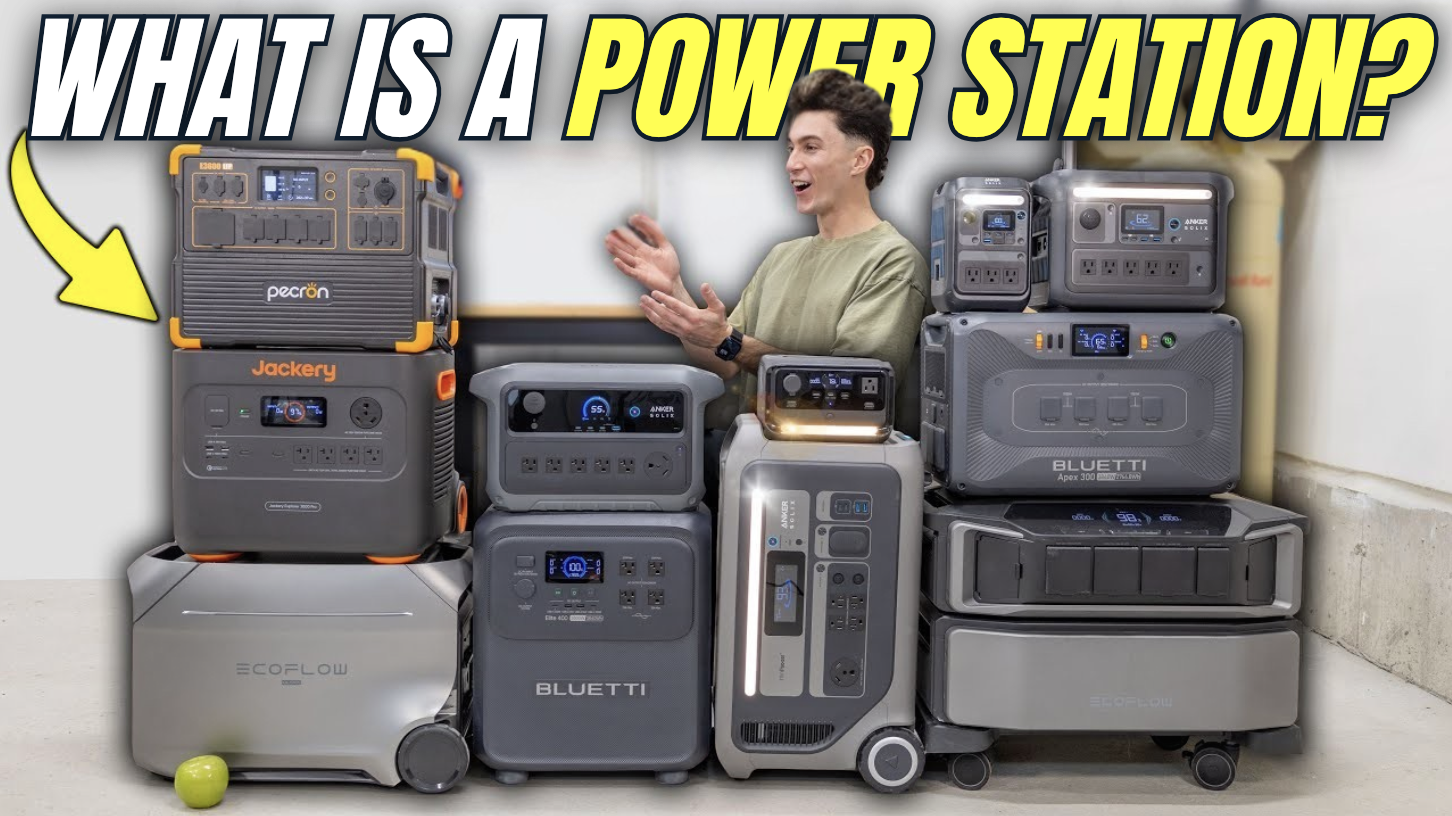
What exactly is a portable power station? Is a power station the same thing as a solar generator? Should you buy a portable power station, and if so, how do you choose the right one?
With portable power stations growing in popularity for campers, homeowners, and basically anyone needing reliable backup power, we get questions about them all the time. And, like most questions related to solar power, the answers are far less complicated than most people think.
Whether you’re prepping for blackouts and emergencies, just want to step up your camping setup, need a reliable source of power for your off grid property, or just want to cut down on your electricity bills, a portable power station can be your all-in-one solution.
That’s why we are going to take the time to explain how portable power stations work, what they can be used for, and how you can choose the right one for your needs.
In really simple terms, a portable power station is just a rechargeable battery bank that has a built-in inverter, so it can feature its own input and output ports.
Using a portable power station, you can run your AC electronics using the DC power stored inside the unit’s built-in battery. A solar generator, meaning a power station that has a solar input, also allows you to store and use solar power by simply connecting the power station to solar panels.
Unlike traditional gas generators, which burn fuel and produce emissions, portable power stations use high-capacity lithium or lithium iron phosphate (LiFePO4) batteries to store and distribute power, so they are clean and relatively silent.
When you need the power inside the unit’s battery, you can access it through a variety of built-in output ports, including AC outlets for household appliances, DC ports for things like car fridges and CPAP machines, USB-A and USB-C ports for portable devices, and sometimes even wireless charging pads for phones.
Basically, they’re all-in-one power sources that you can take with you anywhere that you need power. When paired with solar panels, you can use them to generate completely independent power that you can store and use fully off-grid.
You may have seen portable power stations being advertised as "solar generators". This just means the power station can be connected to solar panels, so you can use the power station to store and access free solar power.
Since the power station has a built-in power inverter, it can convert the DC power that solar panels generate into the AC power your devices and appliances need. Basically, the power station acts as a portable, all-in-one solar power system. This is why a lot of brands use the name “solar generator” when advertising their power stations.
In the past, solar panel compatibility wasn’t that common, so power station brands like EcoFlow and Bluetti advertised their solar-compatible units as “solar generators”. This helped stress solar compatibility as a real selling feature, while also separating their products from other power stations on the market that didn’t work with solar panels. It also helped buyers realize that there was an alternative to gas generators.
Today, most power stations are compatible with solar panels, so calling a power station a solar generator can seem a bit redundant, but it’s still a marketing term you’ll come across quite a bit.
It’s also always worth double-checking to make sure that you’re buying a power station that is solar-compatible, as there are still a few out there that aren’t. This is particularly important if you plan on using your power station as an off-grid power source.
Think of a portable power station like a high-capacity power bank, but one that is more versatile and much smarter. Here’s a quick look at what’s happening under the hood:
As you can probably guess, the internal battery inside the power station stores electricity. The battery can then be charged through various sources like a standard wall outlet (AC power), or through a car charger, or solar panels (DC power).
Since you have so many charging options, you can even charge most power stations with a traditional gas generator. This is actually a really useful strategy if you’re planning to use a portable power station for home backup, as it allows you to quickly charge the unit, then enjoy silent power you can use indoors.
We actually put together a guide on using this combination: Power Station vs Gas Generator: Why Not Both?
We mentioned earlier that most devices and appliances inside your home run on AC power, but the battery inside your power station stores energy as DC power. So, when you plug an appliance or portable device into your power station, the unit’s built-in inverter has to convert that stored DC power into usable AC power, just like the electricity you get from the wall outlets in your home.
It’s this built-in inverter that enables power stations to act as all-in-one solar power systems, as you can connect them to solar panels and use the battery to store the DC power they generate, then use that stored solar power directly to run your devices and appliances. There’s no need for a separate inverter because everything is contained within the unit.
Once the power has been converted into AC power by the power station’s inverter, that energy is then sent to the output ports, allowing you to directly supply power to your devices and appliances.
Depending on the model, a power station will have a variety of different output ports for charging and running various devices. From USB-A and USB-C plugs for small electronics to high-wattage 240V outlets for heavy-duty power tools and kitchen appliances, power stations are equipped with a range of ports, allowing you to purchase the exact type of power station that meets your needs.
Output ports vary significantly depending on the size of the power station and the specific model you are looking at.
Just for an example, take a look at the new EcoFlow DELTA 3 1000 Air, which just has a single AC port and two USB outlets. Compare that highly portable power station to the EcoFlow DELTA 2 Max, which has six AC ports, six USB ports, a 12V plug, and more.
By comparison, the EcoFlow DELTA Air seems kind of useless, but it’s important to remember that two units were designed for totally different purposes. One was made to supply power to a few small devices, and the other to run appliances for home backup purposes. So, while each is an EcoFlow power station, the best power station for you will depend on your needs.
Finally, these power stations have a built-in Battery Management System (BMS), as well as a charge controller. These protect the unit from overheating, overcharging, and short circuiting, ensuring safe and efficient operation. Basically, they act like your power station’s brain.
Power stations differ a lot, so it’s important to make sure that you consider the specs and features they come equipped with when you’re trying to decide which one fits your needs.
Not only will understanding the differences between portable power stations help you get something that will actually work for you, it prevents you wasting your money on a unit you don’t need. Here are just some of the main factors you need to take into consideration:
The battery type and capacity determine how long a power station can run and how many devices it can support. Power station battery capacities are typically measured in watt-hours (Wh). The higher the number, the more power the power station’s battery can store.
For example, a 1,000Wh power station can theoretically run a 100W appliance for about 10 hours, though real-world efficiency varies. Our breakdown of how long a power station can run a fridge should help you understand real-world power station runtimes a little better.
Just like solar batteries for a traditional solar power system, the battery capacity of power stations vary wildly.
You have small units, like the Anker SOLIX C300X, which has a 288Wh battery that can store just enough power to charge phones and run small devices and appliances while camping.
Then you also have high-capacity beasts, like the EcoFlow DELTA Pro 3, which has an expandable 4,096Wh battery, so it can store enough power to run major appliances for days at a time.
The type of battery the power station is equipped with is also a factor you should consider, although battery capacity tends to be the most important factor for most buyers. Still, most modern portable power stations use either:
Basically, you can choose a power station with a battery type and capacity that matches your needs. If you’re just looking to run a few basics for a single day, a unit with a capacity under 2,000Wh should do the trick. If you need more than that, aim higher.
Quick Tip: We always recommend choosing an expandable power station, meaning a unit that is compatible with expansion batteries. This gives you more flexibility and helps future-proof your unit, as you can always upgrade your storage capacity in the future.
Just like how power stations have different storage capacities, they also have inverters that can output different levels of power.
The inverter size dictates how much power a power station can supply at once. This is almost always measured in watts (W). Outside of the output rating, there are also two other factors you should consider:
Again, you need to choose a power station that can handle your needs. If you plan on running stuff like power tools, you’re going to need a heavy-duty power station with a big inverter, like the 6,000W inverter the Anker SOLIX F3800 is packing.
On the other hand, if you just plan on running lights and charging low-wattage portable electronics, something like the little 286W inverter inside something like an EcoFlow RIver 3 Plus would do the trick.
Always choose a power station that has an inverter with an output rating and surge capacity that is going to be able to handle the types of loads you will be running.
If you’re unsure where to start, we put together two useful guides: The Best Big Power Stations and The Best Small Power Stations.
Most power stations allow you to recharge the internal battery in multiple ways, including:
Again, you’ll want to assess the charge speeds and input options to find a power station that can do what you want it to do. Generally, the faster you can charge the power station, the better it’s going to be (who wants something that takes a long time to charge?).
As mentioned earlier, different devices require different ports, so having a variety is crucial. Common ports include:
A good portable power station should have an easy-to-read display screen that can show:
Many also support Wi-Fi and Bluetooth app integration for remote control and monitoring. This used to be a rarity reserved for only the most premium brands, but it is now something we’re seeing almost across the board. With that said, app quality still varies quite a bit.
All of these features make the power station more convenient to use, so it’s a good idea to look into what types of extras a power station is equipped with before you purchase it.
As portable power stations grow in popularity, they’re becoming increasingly versatile. Here’s just a few of the more common uses for them:
Since they can act as off-grid power sources, power stations can be really useful for any situation where you can’t depend on the grid. Whether it’s a temporary blackout, or a more serious emergency situation, a power station could help you keep essential devices running, including CPAP machines and other medical equipment.
A power station can also keep your fridge running, your communication devices charged, allow you to run fans and space heaters, or even just keep the lights on.
Basically, they can be one of the most important tools for emergency prep.
It’s not all doom and gloom. A power station can also just be a fun piece of equipment you take with you on your next off-grid adventure. From running a portable fridge and your DC-powered cooking gear to charging drones, cameras, and GPS devices, a portable power station allows you to bring electricity with you, no matter where your next camping adventure takes you.
There are plenty of brands that make power stations specifically for off grid adventures, so choosing the best power station for camping is easier than it has ever been.
If you’re boondocking and taking your RV off-grid, the right power station can be used to run everything while you’re on the road, including TVs, fans, and water pumps.
For digital nomads, a portable power station can be your ultimate companion by keeping your laptop and other portable devices charged, even when you don’t have access to grid power.
You might want to look for a power station that has a 30-amp or 50-amp plug, like a Jackery Explorer 5000 Plus or Anker SOLIX F3800 Plus, as this will make it much easier to run all of your RV appliances.
Increasingly, we are seeing power stations being paired with expansion batteries so they can be used for remote worksites, as well as backyard workshops.
From running power tools where traditional outlets aren’t available to lighting up a worksite with portable flood lights, you don’t have to rely on the grid or a noisy gas generator to tackle an off-grid project.
We even used an EcoFlow DELTA Pro Ultra to demonstrate how useful a power station can be for this type of work.
The higher capacity power stations are also being used as the backbones of off-grid power systems. Since all of the components required to build a solar power system are self-contained, all you have to do is connect a power station to a solar panel array to store solar energy you can use at night, during cloudy days, or really wherever you need it.
If you have the right battery capacity and output rating, you can run appliances, heating systems, and more, even in off-grid cabins and remote tiny homes. Units like the Anker F3800 Plus, EcoFlow DELTA Pro Ultra, Pecron E3600LFP, and Bluetti Apex 300 are all practical power stations for these types of off-grid setups.
If you're interested in learning how to use a power station to power an off-grid property, we put together an entire guide that breaks down how Dylan is able to run most of his tiny home using a Pecron F3000LFP and a few solar panels: Off Grid Tiny Home Power Station Upgrade
If you’re in the market for a power station, there are some important factors you should consider to ensure you get the right one for your needs:
If you’re still feeling a little bit unsure about your options, check out our beginner-friendly guide that explains how to pick the right portable power station for your unique needs. Trust us, choosing the best power station is not as complicated as it seems, you just need to know what to look for.
Portable power stations are a game-changer for anyone who needs reliable, silent, and clean energy on the go.
Whether you're prepping for emergencies, heading off the grid, or just want a backup power source, understanding how these devices work and what to look for can help you make the right decision.
If you’re still feeling a bit confused, we have a quick Power Station Quiz that you can take to find the best power station for your needs. Otherwise, we have reviewed hundreds of power stations, so make sure you check those out before you order anything.
Explore more practical tips, guides, and insights to help you get the most out of solar
More Resources >