Bluetti has released a lot of new portable power stations over the last couple of years, and if you’ve been following our reviews, you know we’ve had mixed feelings about the brand.
Some of their older units really let us down, and we weren’t shy about saying so. But more recently, Bluetti seems to have been listening to customers and investing heavily in R&D.
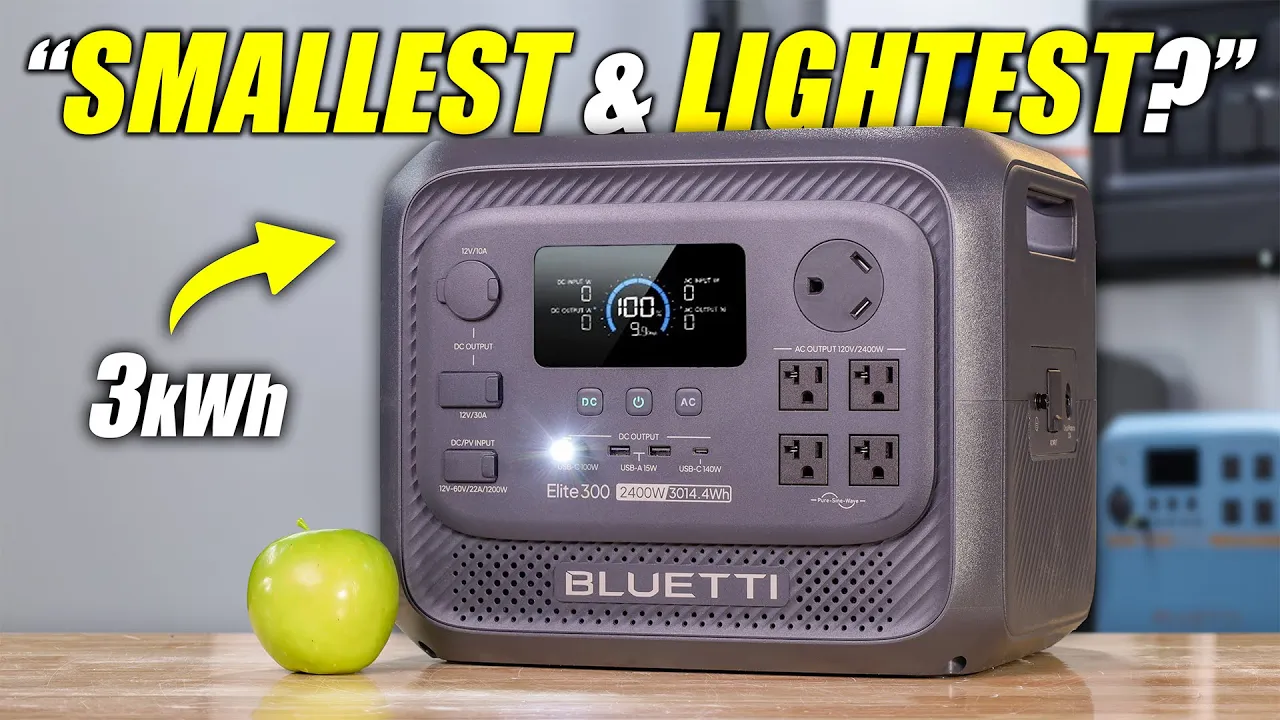
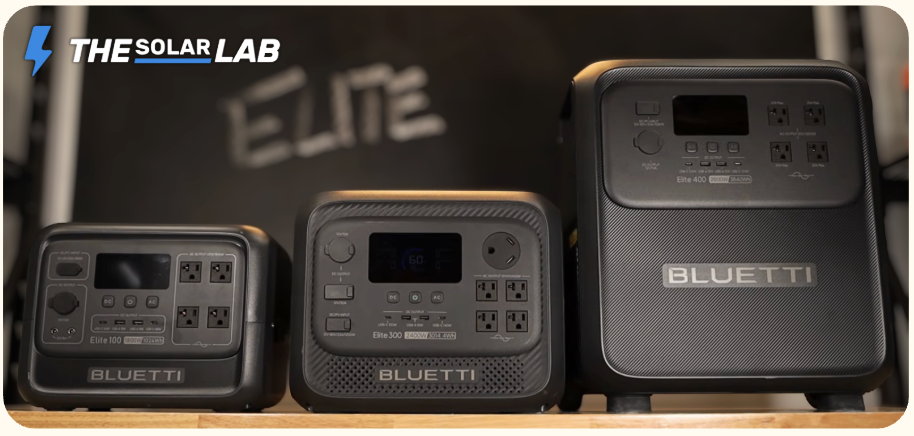
In fact, several newer Bluetti power stations have genuinely impressed us, including the Elite 100 V2 and the Elite 200 V2, which we reviewed last year. Now the company is back with the Bluetti Elite 300, a 3,014Wh portable power station that they claim is the most compact and lightweight 3kWh unit on the market.
That’s a big claim. So, the real question is simple: does the Bluetti Elite 300 actually live up to the hype? Let’s break it down.
Before we get into our own performance and usability tests, here’s a quick look at what the Bluetti Elite 300 solar generator is supposed to offer:
{{review-summary}}
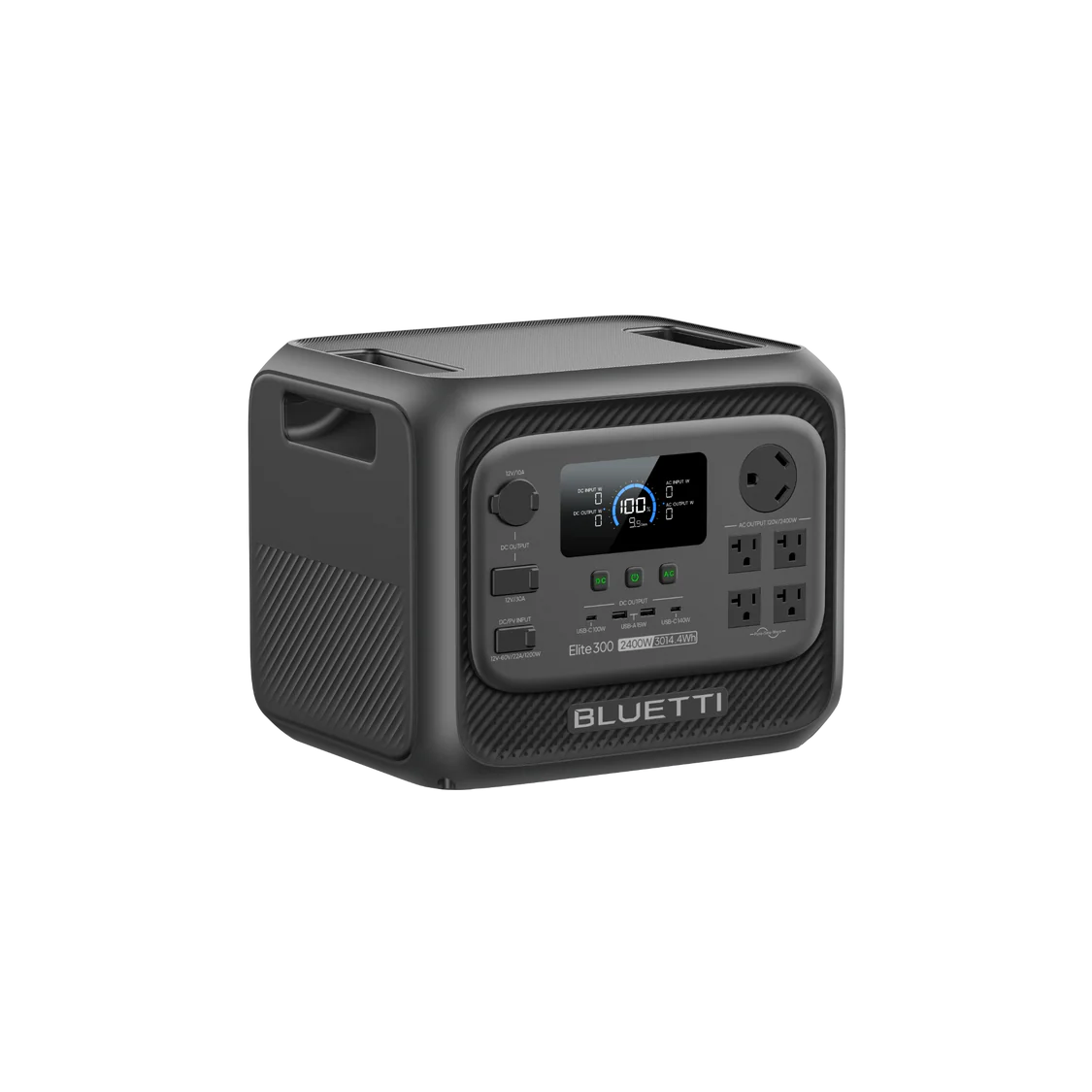
The Elite 300 keeps things relatively simple in terms of ports and expandability, but the layout includes most of what we’d expect to see from a name-brand portable solar generator.
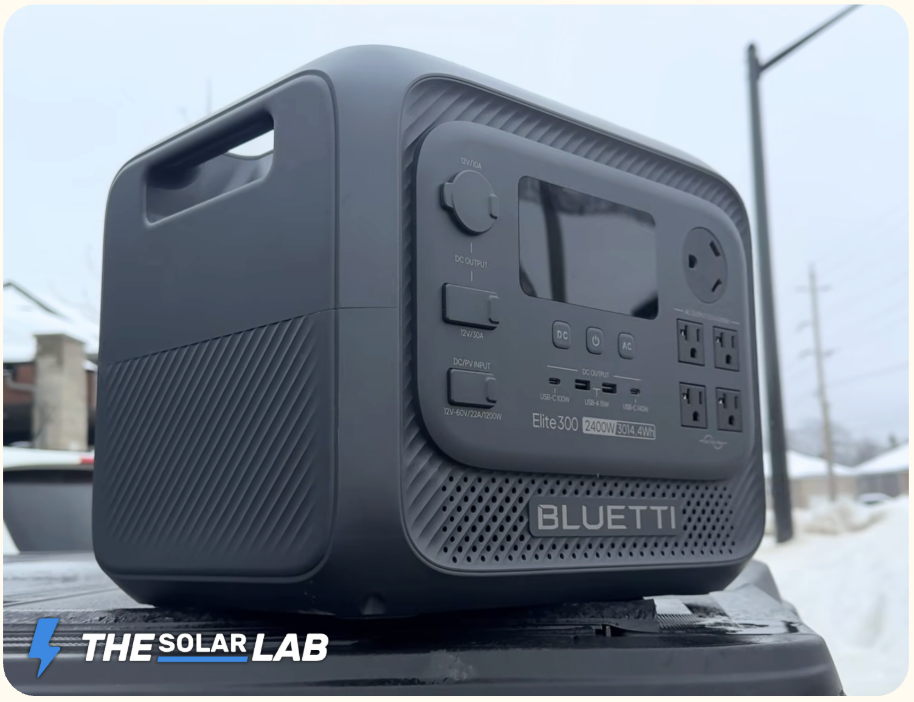
At 58 lbs, the Elite 300 passes the Tiny Baby Lift Test, but it isn’t exactly a light. However, for a 3kWh power station, it’s actually fairly compact and dense.
Bluetti’s claim that it’s the world’s smallest power station in this capacity class is probably close to the truth, but we weren’t exactly blown away by the size. It’s fairly compact, but it’s not some crazy space-saver that you can easily throw around.
The design and layout feel like this unit is an evolution of older models, such as the Bluetti AC200L, but with a more refined and slightly smaller footprint.
Bluetti also updated the display screen. The screen has that familiar Bluetti interface, but it’s a little larger and easier to read at a glance than what we saw on previous releases.
Like the screen, the Bluetti mobile app works exactly how we would expect it to. You can turn the inverter outputs on and off, monitor charging rates, and install firmware updates. It’s not the fastest app on the market, and it’s a bit laggier than the EcoFlow app, but it still gets the job done.
One really nice touch is the removable rear fan filter, which allows you to clean dust out of the Elite 300’s air vents. That might seem like a minor thing, but if you use this Bluetti solar generator outdoors for camping, or even at a dusty job site, being able to clean the fans can extend the lifespan of the unit.
Now that we’ve covered the basic specifications and our first impressions, let’s see how this unit performed during our real-world testing:
One area where the Bluetti Elite 300 power station performs fairly well is charging speed.
The Elite 300 has a 1,800W AC input, meaning it should be able to reach full capacity in just over an hour and a half. When we tested the wall charging, it took about 2 hours and 44 minutes to charge from 0% to full capacity.
That sounds pretty bad, but it’s actually reasonably fast for a 3,000Wh power station. It’s not the fastest option available today, but having the ability to plug it into a wall outlet and have a full charge in under three hours is respectable.
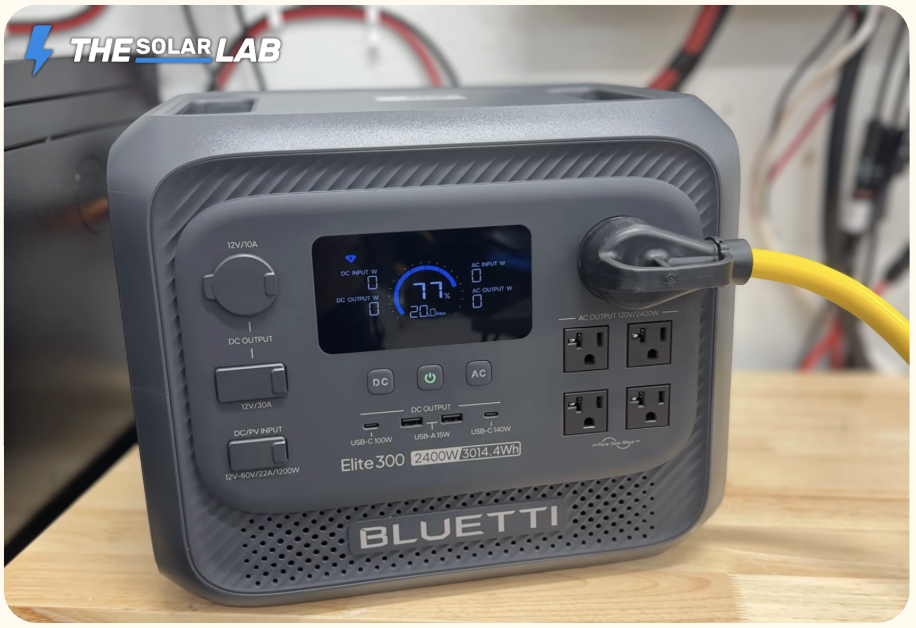
When it comes to charging the unit with solar panels, the 1,200W of solar input that Bluetti advertises turned out to be accurate. Under ideal sunlight conditions, that means you can recharge the entire 3,014Wh battery in around 3 hours. This makes it a viable option for people looking to run a simple off-grid solar setup or extend runtime during outages. Given the Elite 300’s battery size, both the AC and solar inputs are respectable.
During our testing, the Bluetti Elite 300 offered around an 86% efficiency rating, which puts it slightly above average compared to other portable power stations in this capacity range. For perspective, we give anything above 80% an A grade.
It also handled surge loads surprisingly well. Although the inverter is rated to have a 2,400W continuous output, we were able to achieve surge performance up to 3,900W. This is strong enough to start a lot of appliances that have higher start-up spikes. For a compact unit, that’s really handy.
Overall, the performance is solid. Nothing wildly ground-breaking, but it does exactly what Bluetti claims it will without any major issues. It sounds like faint praise, but honestly, that counts for a lot, especially given that was one of our early complaints with the brand back when we tested the Bluetti AC500.
While we didn’t really find anything overly exciting when we tested this unit, that’s not always a bad thing. Sometimes, just having a basic unit that gets the job done is all you really want. Still, there was a few things that stood out to us as positives:
A 30A RV outlet is a great addition to any power station, especially for anyone who plans to use the unit inside a camper van, trailer, or RV. The one you get on the Elite 300 is really well designed and positioned.
While it’s not capable of delivering a full 30A, as you can’t pull 3,600W continuously, it’s still very useful for running most RV appliances.
Since Bluetti mounted the outlet sideways, you also have the option to plug in a 30A cable in a way that won’t block the four 120V AC outlets that sit below it. Again, that might sound like a small detail, but it’s a thoughtful design choice that a lot of manufacturers get wrong.
For whatever reason, a lot of power stations are still designed with underpowered USB-C ports, which limits their usefulness. Given that so many phones and laptops can now be fast-charged with USB-C ports, it’s always nice to get a unit that includes those types of plugs.
The Elite 300 comes with a 140W USB-C, as well as a 100W USB-C port. You still get two 15W USB-A ports, but those USB-Cs can deliver full high-output charging, meaning you can run two laptops at pretty much full charging speed at the same time.
For backing up a home office, or using the unit for any type of remote work, it’s a really practical power station.
This is something we were really glad to see! Older Bluetti power stations used proprietary cords, which could be a nightmare if you lost the cable.
We just reviewed an expensive EcoFlow DELTA Pro Ultra X that came with a pricey proprietary plug, so this wasn’t an issue that was unique to Bluetti, but they were definitely known for it.
Luckily, the Elite 300 uses a standard AC power cord that you could find on Amazon for around $20. So, not only are replacement cables for this unit cheap, they’re easy to find.
The removable rear fan cover allows you to clean dust and dirt from the cooling system. Again, including user-serviceable fans is surprisingly rare in portable power stations, even though a lot of people use them in rugged, off-grid environments.
For outdoor users, like campers, RV owners, or anyone running a backyard solar setup, this is a genuinely useful feature. It’s also very practical if you plan on leaving the unit in a dusty basement or garage for home backup purposes.
While there’s a lot to like about this unit, we’ve still never found a portable power station that we could describe as perfect. Here are the main issues we found when we tested this unit:
One downside we found with this unit was the relatively high idle consumption. We measured the idle rate around 15W, which is almost double what we’ve seen on some other recent Bluetti power stations. Even the older AC200L power station that the Elite 300 is modeled on idled closer to 8W.
In practical terms, that means this power station will last about three days if left on with no power being pulled from it. That’s far from terrible, but it still feels like a step backward.
This is a smaller gripe, but it’s also something we’ve been asking Bluetti to add to their power stations for years.
We know from experience that a built-in LED light can be extremely useful during power outages, especially when you’re talking about a unit that weighs almost 60lbs and usually requires two hands to carry.
If the power goes out in your basement or garage, you may not have a free hand to hold a flashlight. It’s a small feature that would add a lot of convenience.
Another minor frustration is very tight spacing between the 120V AC outlets. While we like how they positioned the 30A plug, the others could use some improvement.
If you plug in something with a large power brick, like a camera charger, heated blanket, or CPAP machine, you may end up blocking some of the other outlets. A little more spacing would make the power station easier to use with bulky plugs.
Finally, the biggest issue for many buyers will likely be value. Even with the early-bird sale and our own discount code, the Elite 300 costs about $1,011. This is still more expensive than some competing units.
For example, the Pecron F3000 offers a bigger battery, a more powerful inverter, and expandability. However, it only costs $799, which is over $200 less than the Elite 300.
If you’re purely chasing maximum capacity per dollar, or you just want to score a deal, there are a lot better deals out there.
Despite a few drawbacks, the BLUETTI Elite 300 solar generator is still a solid option for several types of users. Thanks to its size and battery capacity, it’s particularly well suited for:
With 3kWh of battery capacity, it can easily keep essentials running during an outage, including a refrigerator, lights, internet router, handheld electronics, and a few small appliances.
And because it’s relatively compact for its size, it’s still portable enough to take along for outdoor adventures.
The Bluetti Elite 300 is far from what we’d call a revolutionary power station, but it’s a reliable, well-rounded upgrade over the Bluetti Elite 100 and Elite 200 V2.
You get solid efficiency, decent charging capabilities, a 30A port, and a surprisingly compact design for a unit with a 3,014Wh battery. That said, it does offer slightly weaker value compared to units from more budget-friendly brands, like Pecron.
Still, if you’re specifically looking for a compact 3kWh Bluetti power station, the Elite 300 is a dependable option that performs exactly as advertised, which, in this category, is often the most important thing.
If you’re not sure which power station fits your needs, try our Power Station Quiz. It only takes about 30 seconds and gives you an instant recommendation based on how you plan to use your system.
We test solar products so you don’t have to. Check out our opinions and which units we think are worth your money and which ones aren't.
More Reviews >