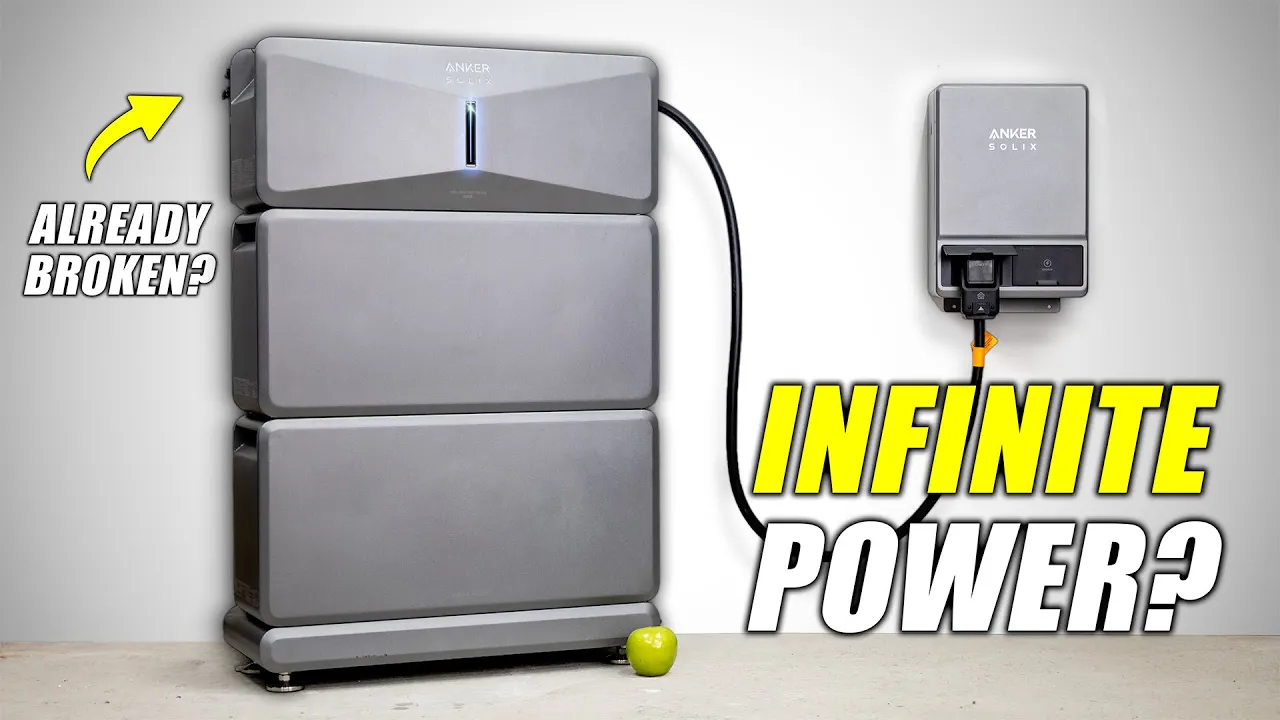
The new Anker SOLIX E10 is Anker’s latest move into the world of whole-home backup, and it’s not your typical power station. Instead, it sits somewhere between a high-capacity plug-and-play power station and a traditional solar setup, aiming to give you serious backup power without the complexity of a full install.
If you’re familiar with modular systems like the DELTA Pro Ultra, you’ll already have a rough idea of what this category looks like. But the E10 takes a slightly different approach, leaning more towards being a clean, stackable Energy Storage System (ESS) rather than an expandable, feature-packed power station.
We’ve spent a lot of time testing this system in different configurations, pushing both the hardware and Anker’s support team to their limits. And while there’s a lot to like about this system, there are also a few things that feel unfinished. Let’s break it all down.
Normally, we jump right into the specifications when we review any portable power station, but this unit is a little different, so it makes sense to start by explaining what the E10 actually is.
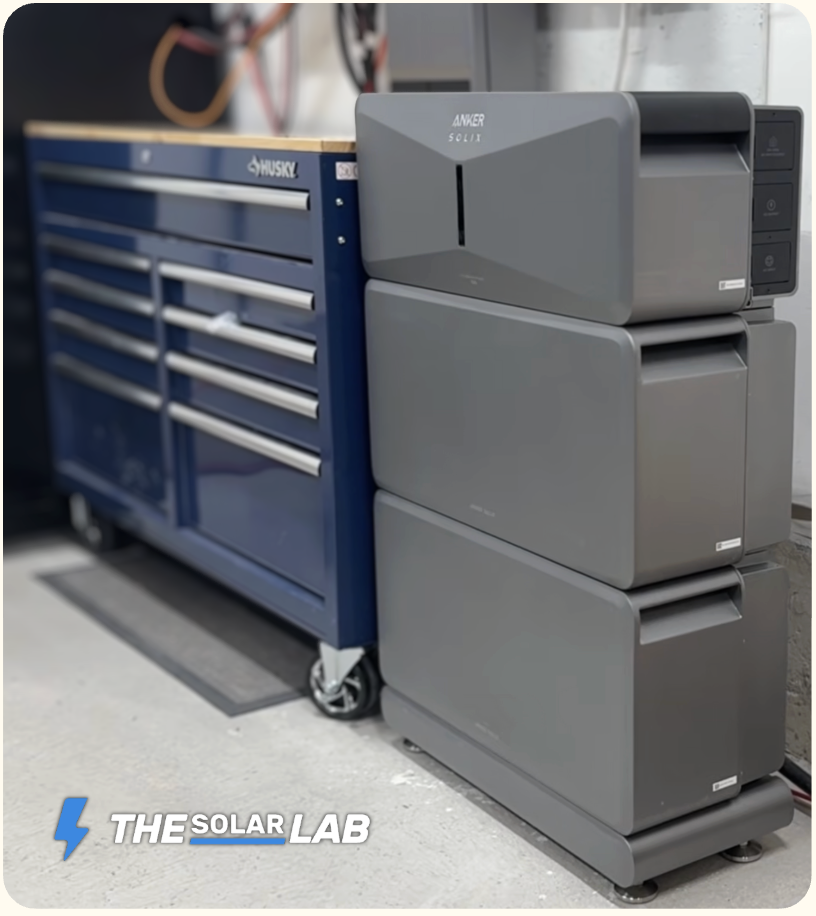
At its core, the Anker E10 is an Energy Storage System (ESS). That means it’s built more like a traditional solar battery setup than a portable power station.
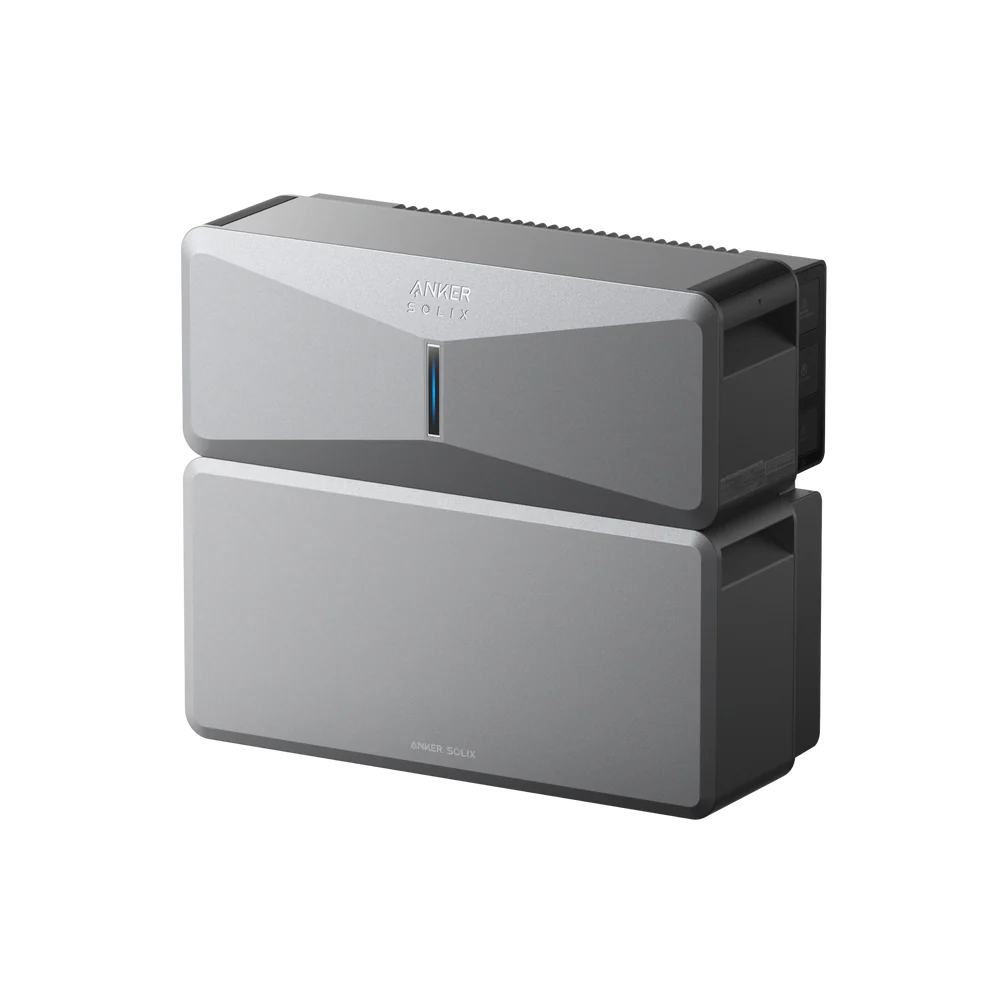
You’ve got a stackable design where the inverter sits on top and the battery units stack underneath it. That’s similar to the EcoFlow DELTA Pro Ultra, but with the E10, there’s no complicated wiring and no clunky connection cables. Each component clicks into place wirelessly, creating a clean, modular system that’s incredibly easy to set up and scale.
Unlike most portable power stations, there are no standard wall outlets or USB ports built into the unit itself. Instead, it’s designed to connect directly to your home through solutions like the Anker Smart Inlet Box, a transfer switch, or a full smart panel setup.
This makes it much more of a home backup system than a “wheel it out during blackouts” or “take it camping” type of unit.
The design is genuinely innovative. Not only does it look really sleek, the quick-connection points that allow you to drop the batteries into place are something we’ve never seen on any portable power station or stackable battery.
Now that you’re a little more familiar with what exactly this unit is, here’s a quick breakdown of what you’re working with:
{{review-summary}}
The first thing that stands out with the E10 is just how clean and simple the setup is. This is one of the easiest systems we’ve ever installed, not just in this category. You literally stack the batteries, drop the inverter on top, and you’re most of the way there.
On top of that, all of the cables and accessories are color-coded, making setup pretty much foolproof. Even some of the smaller details really impressed us, like Anker’s decision to add a protective film over the terminals so you avoid scratching the unit and filling the internals with metal shavings if you decide to drill your own cable ports.
The same attention to detail is evident when you look at the accessories available for the E10. For example, the Anker SOLIX Smart Inlet Box can be mounted directly to the wall. Although there’s no pre-made cable knockouts, so you’ll have to drill your own, they designed that in a way that it’s much easier than doing so with traditional electrical panels.
That installation simplicity also extends to how flexible the system is. You can run it as a standalone backup power system with a power bar, integrate into your home using a transfer switch, or go all-in by connecting it to the Anker SOLIX Smart Power Dock. It doesn’t force you into one path, which is something we really appreciate.
Now that you know a little more about it, here’s how the Anker SOLIX E10 delivered performance-wise:
Once we installed the Anker SOLIX E10, we quickly found that almost all of the advertised specifications delivered as advertised.
The system easily handled its 7,600W rated output without any issues, which didn’t exactly surprise us given that Anker products usually deliver in this category, However, what blew us away was how this unit absolutely crushed our surge testing.
We were able to hit surges of nearly 30kW for short bursts! Being able to support load spikes into the tens of thousands of watts means that this system could start the most demanding loads, like central air conditioners and other large HVAC systems. We tested this repeatedly, and each time it was able to support significant surges without tripping.
Another underrated win here is how the system behaves under stress. When we overloaded it, the E10 didn’t just shut down and stay off, which is often the case with smaller power stations. Instead, it reset itself and came back online automatically. That’s a big deal for home backup power, especially if you’re not around when something trips.
It’s almost like this system behaves more like a traditional solar inverter than a standalone portable power station.
After numerous tests, we measured the efficiency at 87%, which means the E10 performs well compared to other systems in this class. It’s not industry-leading, but it’s comfortably above average. For perspective, we give any power station with an efficiency rating over 80% an A grade and a thumbs up.
The idle consumption came in at about 40 watts, which isn’t terrible for such a high-capacity system, but it’s also something you’ll want to factor in when calculating your battery capacity.
If you’re running intermittent loads, like a sump pump or even a refrigerator, each battery will last roughly 6 to 7 days before you factor in the power requirements for your loads.
That’s actually pretty solid for a system of this size, but it’s also a reminder of something we always talk about: idle draw matters more than most people think, especially when you’re talking about backup power and emergency prep.
We already mentioned how incredibly easy it is to set this unit up, even if you are also planning to install the Anker Smart Inlet Box or Anker Smart Power Dock alongside it.
Another area where it really shined was when we measured the noise (or the lack of it). Since this is a high-voltage system with passive cooling, it runs completely silent. The large heat dissipation fins on the back of the inverter unit mean you don’t have to worry about cooling fans kicking off. This means there’s no annoying humming noise.
For home installs, the practically silent operation is a huge win. Seriously, you could have this thing running beside your bed and we doubt it would wake you up.
You’ve probably guessed by this point that we were largely impressed by the Anker E10. It pretty much matched or exceeded all of the specifications that Anker advertised, which is always an excellent sign. Still, there was a few things that really stood out to us as major highlights:
One of the most interesting and appealing things about the E10 is how many different ways you can use it.
If you want something simple, you can run it as a standalone backup system with minimal setup. While the unit itself doesn’t have any built-in USB ports or AC output plugs, you can use a power strip accessory to pull power from your E10.
If you already have a transfer switch installed, you can also integrate the E10 without buying extra hardware. And if you want to build out a full system, Anker offers additional components like the above-mentioned Smart Power Dock and even a Smart Gas Generator.
This flexibility makes it appealing for a wide range of users. From beginners looking for plug-and-play home backup power to those looking for more advanced setups that can supply power to an entire home, the E10 can be adapted to meet the needs of a huge range of buyers.
Another huge advantage of this system is its potential to be used for reducing electricity bills through peak shaving.
When you pair the unit with the Smart Inlet Box, you can use the E10 for sophisticated time-of-use optimization. In other words, you can charge the E10’s batteries when electricity is cheap and then use that stored power during peak hours to save money.
Depending on where you live, that can make a noticeable difference on your power bill, making the entire E10 system more cost-effective over time. We previously demonstrated how to peak shave with the Anker SOLIX F3800, but thanks to its greater capacity and scalability, the E10 could take this approach to the next level.
Anker’s unique stack-and-go design is genuinely very impressive and innovative. Without wiring between batteries, the whole system is easier to install, and looks much sleeker.
You literally just stack the batteries, drop the inverter into place, connect your input and output cables, then you’re good to go. It’s clean, simple, and very user-friendly.
If you plan on connecting the system to solar panels, the E10 even has a built-in PV isolator switch, saving you from needing to install extra hardware. Again, this simplifies the installation process and reduces clutter caused by having extra wires hanging off your system.
We touched on this in the testing section of this review, but having a semi-portable system that can surge over 30kW is absolutely ridiculous. For those in hot climates, like Texas and Arizona, having the option to purchase a user-friendly system that can start a 5-ton AC unit is a game-changer.
For all the hardware strengths, the E10 isn’t perfect, and we did uncover a few areas we feel could be improved. Luckily, most of these issues related to software and usability issues, but it’s still worth taking the time to point them out:
Unfortunately, there’s no meaningful display screen built into this system. Unlike other modular systems, like the DELTA Pro Ultra X or Bluetti Apex 300, the E10 doesn’t have a display or buttons built into the inverter unit.
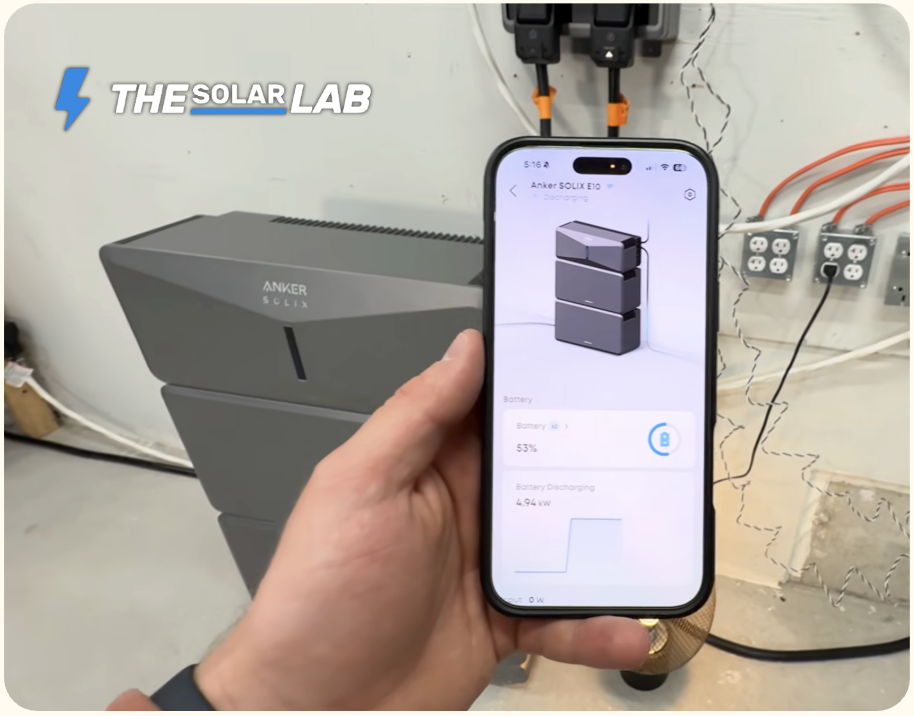
Instead, everything runs through the Anker app, which means no quick visual diagnostics or clear error codes if something goes wrong.
While having no screen would be pretty annoying on its own, to make matters worse, the app experience isn’t great. For an expensive unit that requires you to rely on the app to control and monitor everything, it’s really basic and just not where it needs to be.
Basic features like prioritizing solar over grid charging, scheduling charge times, or even seeing estimated runtime aren’t fully implemented through the app when you have the unit set up in standalone mode. Some of these features do work when paired with the Smart Inlet Box, but that is frustrating for those who do not want it.
There are also some strange UX decisions, like hiding charge rate controls under a “generator” setting, which makes simple adjustments harder than they should be.
The good news is we reached out to Anker with our concerns, and they have already acknowledged these issues and made it clear that they plan to fix them with firmware updates.
We also picked up on a few hardware quirks. Mainly, the handles on the batteries are a noticeable weak point.
We actually broke one during normal use, which isn’t something you want to see on a system this heavy. Basically, the handles are plastic and they are just riveted on with cheap hardware. It’s a small detail, but it matters when you’re dealing with 130 lb batteries.
Another weird decision is the fact that the adjustable base does not come with the unit (technically). This base keeps the batteries off the ground, and helps you level the system if you are using it somewhere like an uneven garage or basement.
Without the base, everything sits on the ground, exposing some of the connection points to moisture damage. As of now, you get the base free with purchase, but it’s advertised as a limited-time offer. Some retailers even sell it separately for around $200, which isn't cheap for something we think is pretty much mandatory. Hopefully, Anker just makes it free with purchase permanetly.
At around $6,458 for a starter setup (inverter + 2 batteries + the base), the E10 is far from cheap, but it’s also not out of line for what it offers.
The real question is value: is the Anker SOLIX E10 worth the price?
Compared to something like the new EcoFlow DELTA Pro Ultra X, the E10 feels more like a permanent solution and less like a portable system. That’s a good thing if you want a clean, dedicated backup setup, but it also means you lose some flexibility.
Right now, the biggest thing holding it back from being an easy recommendation is the software. The hardware and the performance is there, but the overall experience still needs a bit of polish.
If Anker is serious about these firmware updates, which we have no reason to believe they aren’t, then we would have to say the E10 could be seen as an attractive and worthwhile alternative to other modular power stations, and even permanent solar power systems.
We’d say the Anker SOLIX E10 is best suited for people who want:
It’s especially strong as an entry-level ESS for homeowners who don’t want to jump straight into a fully custom solar system. If that sounds like what you’re looking for, we’d highly recommend it.
The Anker SOLIX E10 is a really strong step toward a simpler, more accessible whole-home backup system for average homeowners.
It’s clean, quiet, powerful, and surprisingly easy to set up. For someone who wants to avoid the complexity of a traditional solar install, but still wants serious backup capability, it makes a lot of sense.
The app needs work, and some features feel unfinished, but most of these issues seem fixable with updates. If Anker follows through, this could become one of the best ESS options on the market.
We test solar products so you don’t have to. Check out our opinions and which units we think are worth your money and which ones aren't.
More Reviews >