The major ice storms at the start of 2026 knocked out power across large parts of North America. Since then, we’ve been asked the same questions over and over again: What’s the best power station for backup power without overspending?
Here’s the reality, $1,500 is one of the best price points you can land on if you’re genuinely interested in backup power. Sure, you could go out and spend $300 on a portable unit that will allow you to charge a few phones and keep the lights on, but what’s that really going to do during a serious outage or emergency?
$1,500 is enough to get a serious, mid-range power station that can run your essentials without stepping into the expensive, whole-home backup power station category. You’re not just charging phones anymore, you’re keeping your fridge running, your internet alive, and your house functional during an outage.
And importantly, you’re doing it without wasting money on either cheap junk or oversized systems you don’t actually need. This guide will walk you through a few options, while also explaining how using one during an outage would actually look.
While it seems like an overly specific number, we like using $1,500 as a benchmark price because you can find some of the best portable power station options on the market around this price point.
Below $1,000, most of the power stations you’ll find are very limited. You’re usually dealing with batteries that don’t store enough power for an outage, as well as underpowered inverters that can’t sustain the outputs you need for home backup.
Once you cross into the $1,500 price range, everything changes.
That’s because you’re now working with two critical upgrades: a large battery (around 3kWh or more), a strong inverter (around 3,000 to 3,600W), and expandability (the option to purchase expansion batteries and increase your storage capacity).
Sounds obvious, but the battery capacity determines how long you can run your devices, while the inverter determines what you can run. When you have both, you’re no longer making compromises. That’s why we find spending around $1,500 will get you the best power station for blackouts and basic emergency prep.
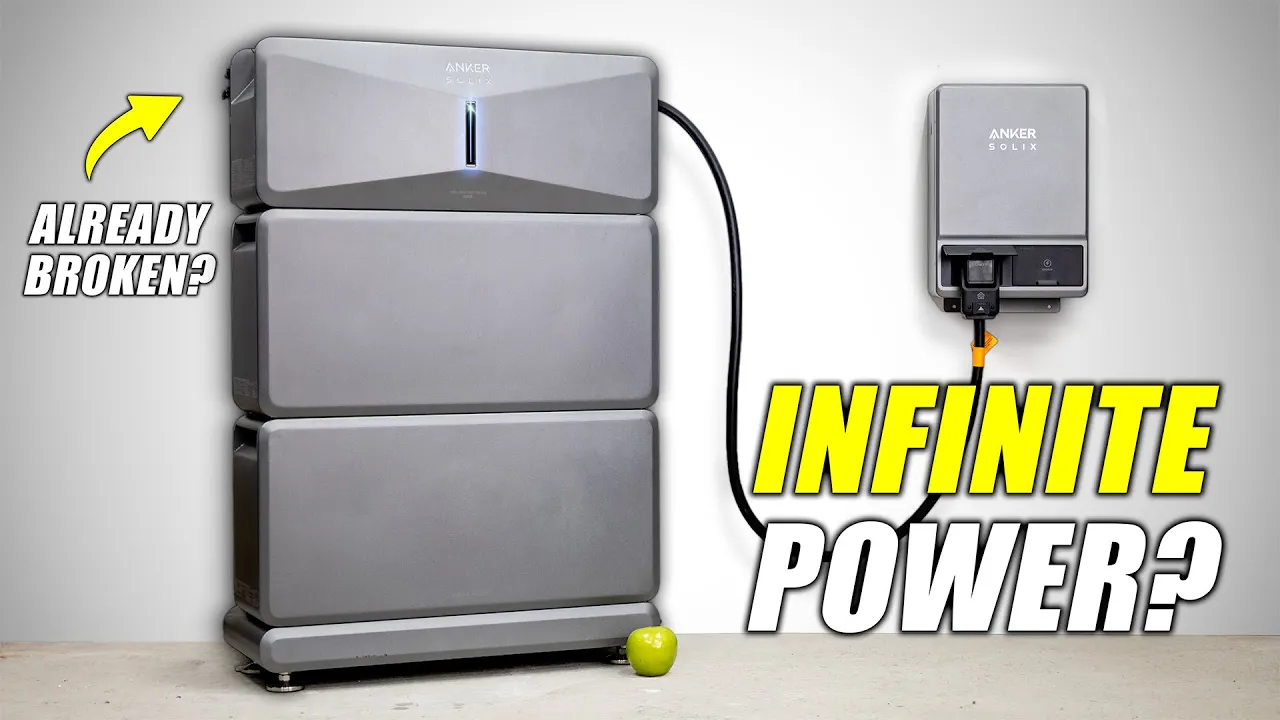
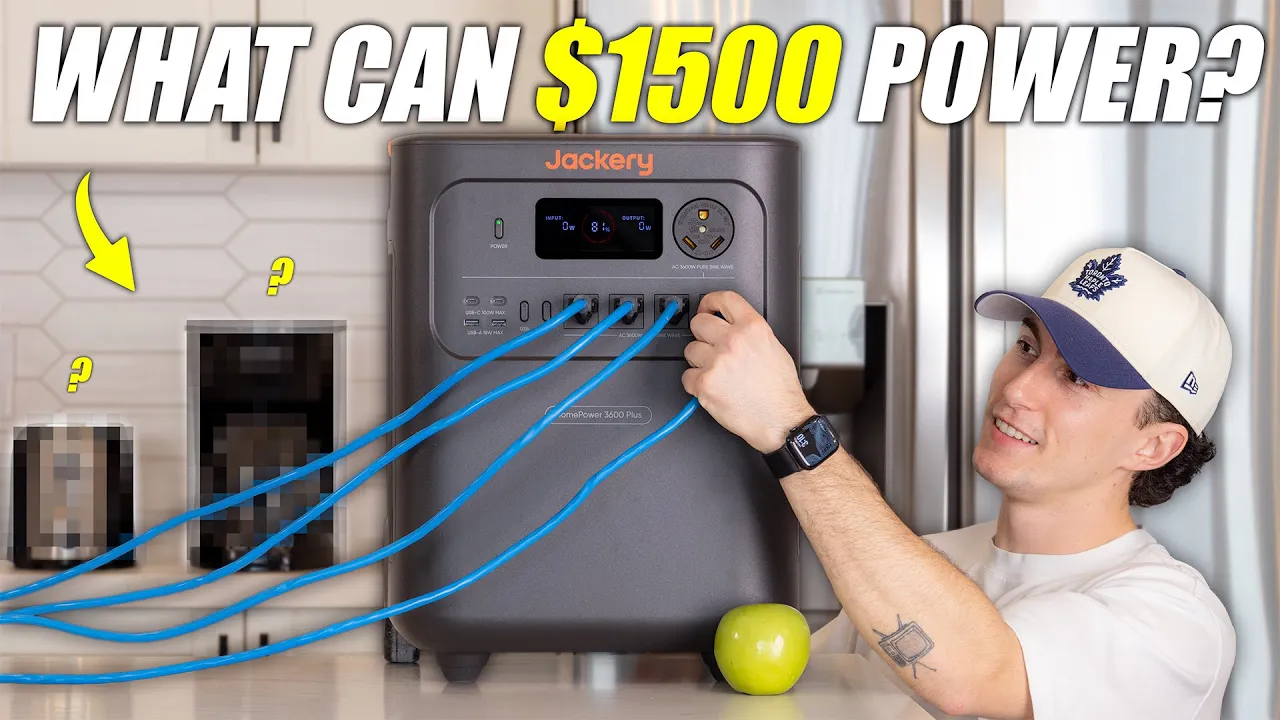
There are lots of options at this price point, but units like the Jackery HomePower 3600 Plus, the EcoFlow DELTA 3 Ultra Plus, and the Anker SOLIX F3000 all offer very similar core specs: roughly 3,000 to 3,600Wh of battery capacity, and a 3,600W inverter.
While the Anker F3000 comes in at around $1,300, so it’s a bit cheaper, the other two are available for pretty much exactly $1,500. Not only have we tested all three, they’re also made by brands with reputations for making reliable units.
If you’re trying to stretch your budget further, something like the Pecron F3000 comes in under $1,000, which leaves room to add a Pecron EP3000-48V Expansion Battery. That’s one of the more flexible ways to build out a system over time without committing all your money upfront.
For this breakdown, though, we’re going to focus on the Jackery HomePower 3600 Plus. It has one of the largest batteries in this price range, and it’s a great example of what you can realistically expect from a unit in this class.
While you could just take our word for it that these are some of the best power stations for home backup, that doesn’t mean much unless we explain why.
To help you understand why they’re worth the cost, let’s walk through using one during a realistic 24-hour outage scenario.
While the average power outage in the United States is around 7 hours, using a full day helps us show you what these units are capable of under pressure. Here are the essentials most people want to keep running, along with why they use the amount of power they do:
We previously published a guide that explained how much power a fridge uses. The main takeaway was that refrigerators cycle on and off throughout the day, only pulling power when the compressor kicks in. Over a 24-hour period, we calculated that the average modern fridge uses around 1,300Wh (1.3kWh).
Like a fridge, a sump pump only runs when it’s needed. In extreme conditions, like heavy rain or flooding, a sump pump can cycle a lot. In this example, we’re going to assume it runs every few minutes, which is far more aggressive than normal use, but it helps illustrate a worst-case scenario. In this situation, you’d be looking at about 633Wh over the 24-hour period.
Routers draw very little power, usually around 10 to 15W, but they run nonstop. That low, constant draw adds up over time. Still, we crunched the numbers for our router and calculated that it used about 288Wh over a 24-hour period.
Modern LED lights are extremely efficient, often pulling just 3W to 10W each. Even running multiple lights for several hours doesn’t add much to your total consumption. Let’s just say 100Wh over the day.
When you add all of that up, you’re looking at roughly 2,321Wh over 24 hours. Sure, some people are going to burn through more power, but we consider those to be pretty realistic numbers for the average house.
With a power station like the Jackery Home Power 3600 Plus, which has about 3,584Wh of battery capacity, that seems like an easy win. Assuming your power consumption was similar, you’d have 1,263Wh of storage capacity remaining after the full 24-hour day.
On paper, you’ve got plenty of extra power left over…
Here’s where things get more realistic, and where most people miscalculate their power needs
Whenever you turn on the inverter inside a power station, a supply of AC power is constantly delivered to the unit’s outlets, even if nothing is actively running. Since batteries store power as DC power, but almost all of your household electrical loads require AC power, running the inverter is necessary.
While a simple fix would be turning the inverter off when you don’t need it, running it continuously is necessary for devices like fridges or sump pumps that need to kick on and off throughout the day. Unfortunately, that DC to AC inversion process itself uses power, and that electricity is pulled from the battery inside your power station.
With power stations, the power required to run the inverter and other internal mechanisms is known as idle consumption. In our own testing, we found that the Jackery 3600 Plus pulls about 34W per hour just sitting idle.
That might not sound like much, but over a full day, it adds up to about 824Wh of lost battery power! So, instead of having over 1,321Wh left after running your essentials, you’re actually left with just under 500Wh.
Now, 500Wh is still useful, especially if you consider it as bonus reserve power. You could use it to charge your phone, run a TV, or keep the lights on a little longer, but it’s a big reminder that real-world performance is never as simple as battery capacity alone.
If you want to figure out whether a mid-range power station will work for your home, we recommend using a tool like our Power Consumption Calculator. This will allow you to do the math yourself and determine the battery capacity and inverter output you’d need from a portable power station.
Our calculator has some general electricity requirements for typical household loads, as well as an option to enter your own numbers. However, if you want to be 100% accurate in your calculations, every appliance will also have a label that lists its voltage and amperage.
You can then multiply those together, which will give you the wattage requirements for that appliance or portable device. From there, you can estimate how long it runs each day to calculate total energy use.
It’s a simple process, but it makes a huge difference in choosing the best power station for backup power. Remember, the best power station for you won’t necessarily be the best power station for someone else. Your unique power requirements (and budget) will be the deciding factors.
If you’re still finding everything confusing, we also offer a Free Solar and Backup Power Guide. It walks you through everything you need to know about portable power stations and traditional solar power systems, including how to size your own.
One of the biggest advantages of spending around $1,500 is that you’re not just buying something for emergencies, you’re buying something you’ll be able to use daily.
With a 3,600W inverter, you can run most standard 120V appliances in your home. That includes things like a coffee maker, microwave, kettle, and toaster. You can even run multiple devices at the same time without worrying about overloading the system.
This is also where these units start to overlap with RV and camping requirements. Most power stations in this category include a 30A outlet, which allows you to plug directly into a trailer and run it at full capacity. Again, that’s something smaller units simply can’t do.
And if you ever feel like you need more capacity, many of these systems can be expanded. Whether it’s adding an extra battery or pairing multiple units together, this ability to upgrade means you’re future-proofing your investment.
At this price point, you should expect a few key features. In fact, if your unit is missing the following, it’s probably not worth your money:
You’ll also want to take a look at the unit’s AC charging speeds, solar input, output ports, and more. We have reviewed over 100 different power stations, so you can also read our reviews to make sure that the unit you’re looking at is worth your money.
If you’re looking for the best power station for blackouts, $1,500 is one of the smartest places to start. If you choose one of the units we outlined here, you’ll have enough power to keep your essentials running through an outage.
Plus, these types of units are flexible enough to use for everyday tasks and camping trips. Plus, they’re also expandable, so you can upgrade your setup as your needs grow.
Most importantly, units in this range strike the balance that most people are actually looking for: practical, real-world capabilities that don’t cost a fortune.
If you need more power, and you have more than 1,500 bucks to spend, we also put together a guide that explains what a $2,500 power station setup can do.

We test solar products so you don’t have to. Check out our opinions and which units we think are worth your money and which ones aren't.
More Reviews >